|
Advertising supplement provided by
Duradek
The ABCs of Pedestrian Roof Decks
Pedestrian roof decks are surfaces that are subjected to
pedestrian traffic. They can be constructed with a wood or
concrete substrate, and can be waterproofed using a variety
of materials. Waterproofing systems for wood or concrete decks
are typically classified as protected membrane assemblies
or as exposed membrane assemblies. In protected assemblies,
the waterproofed membranes are protected by another surface,
such as concrete pavers, tiles or wood deck boards. In exposed
assemblies, the waterproof membrane, which is either a liquid-applied
coating or a PVC membrane, is exposed to the elements.
Traditional waterproofing methods in protected assemblies
can result in a number of common problems. Wood can rot. Coatings
can delaminate. Concrete deteriorates. Over time, costly maintenance
and expensive repairs are required to correct these problems.
Liquid coatings can also be problematic. Because concrete
substrates tend to shift in response to daily temperature
fluctuations, unattractive and potential dangerous cracks
can occur. This kind of constant movement can put enormous
stress on epoxy, urethane, and acrylic liquid-applied coatings.
As a result, pinholes, blisters or surface cracks often occur,
allowing moisture to penetrate the membrane and cause further
deterioration of the concrete. In addition, incorrect or inadequate
surface preparation is a huge reason for failure of liquid
coatings.

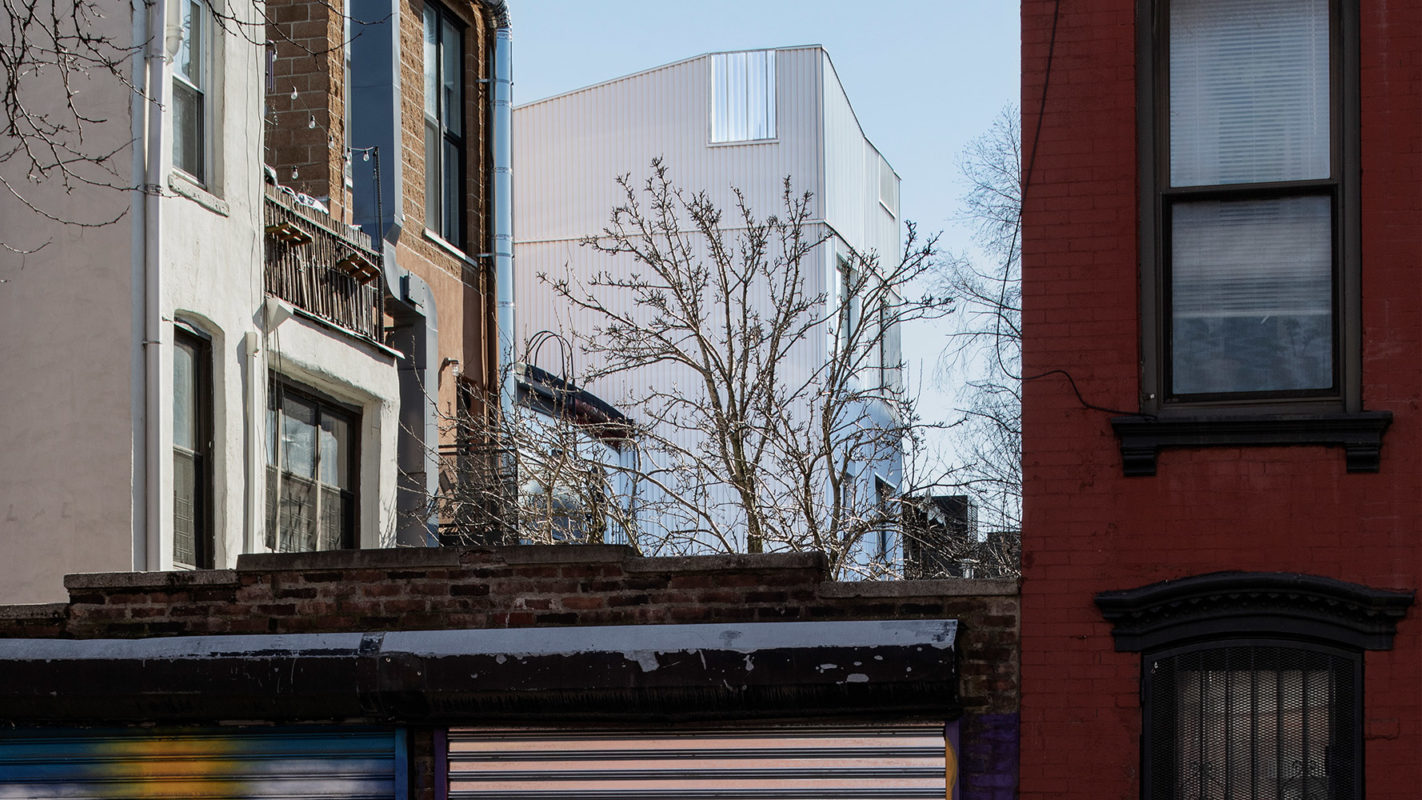
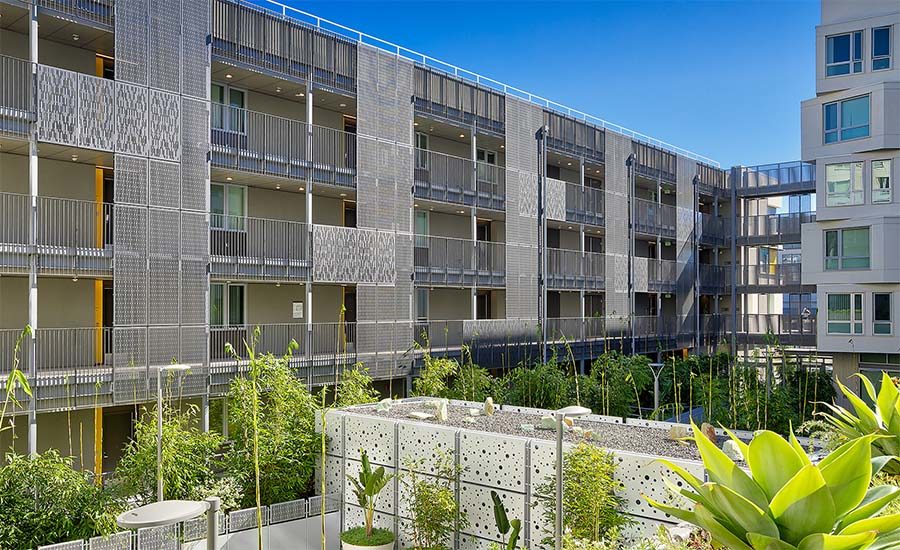
Roof decks offer
additional space to town house dwellers.
Project: Canton Mills, Canton, Maryland. Architecture
Collaborative, Inc.
Photo credit: Jaime Kotanko |
|
|
While outdoor carpet may be an attractive option, installed
on its own, it is not waterproof. When it does get wet, carpet
tends to hold water and dry very slowly. If the carpet is
laid without a waterproof membrane underneath, it will allow
water to permeate the concrete or wood substrate below, causing
it to rot and deteriorate. Furthermore, carpet holds the water
close to the deck and doesnt allow it to dry, therefore
increasing the potential damage. Beyond that, outdoor carpet
fibers tend to deteriorate rapidly through exposure to the
sun. Frequently, frayed and unsightly outdoor carpets need
to be replaced.
Wood decks have a unique aesthetic appeal. But even treated
wood will deteriorate when exposed to the elements. Over time,
exposure to moisture will cause wood decking to split, warp,
twist, shrink, splinter, crack, and rot. Wood decks, which
are also highly combustible and can be slippery when wet,
require constant maintenance, regular repainting, and re-staining.
There are difficulties with paver overlays, too. To begin
with, the structure has to be designed to accept the additional
weight and clearance requirements of the paver system. In
addition, drainage is critical to the waterproof membrane
underneath the paver system, which is difficult to get at
should maintenance, repair or replacement become necessary.
Even PVC membranes are not problem-free. While normal traffic
will not damage the vinyl, removing snow, moving furniture,
dropping sharp objects, skidding a bicycle tire, a roller
blade or the edge of a running shoe across the vinyl creates
friction, and the extreme heat and abrasion may possibly remove
the print. Consequently, solid-color membranes are advisable
for high traffic areas.
PVC membranes may also be affected by the sun. All
products designed for exterior use will eventually be affected
by Mother Nature, says John Ogilvie, President, Duradek,
Ltd. PVC is the best attempt at prolonging the life
cycle of various building products and performs an admirable
job in delaying the inevitable.
|