home
subscribe
free e-newsletter free e-newsletter
reader service
widget
advertise
Subscribe to Architectural Record today
and save 60% off the newsstand price.
Resources   Continued Education
----- Advertising -----
View all Record Blogs
View all
Reader Feedback
Most Commented Most Recommended
Rankings reflect comments made in the past 14 days

Facade Engineering Emerges as a Highly Specialized Science and a Striking Art Form

The modern curtain wall has evolved from static wrapper to active building system.

Page 2 of 6

By Sara Hart

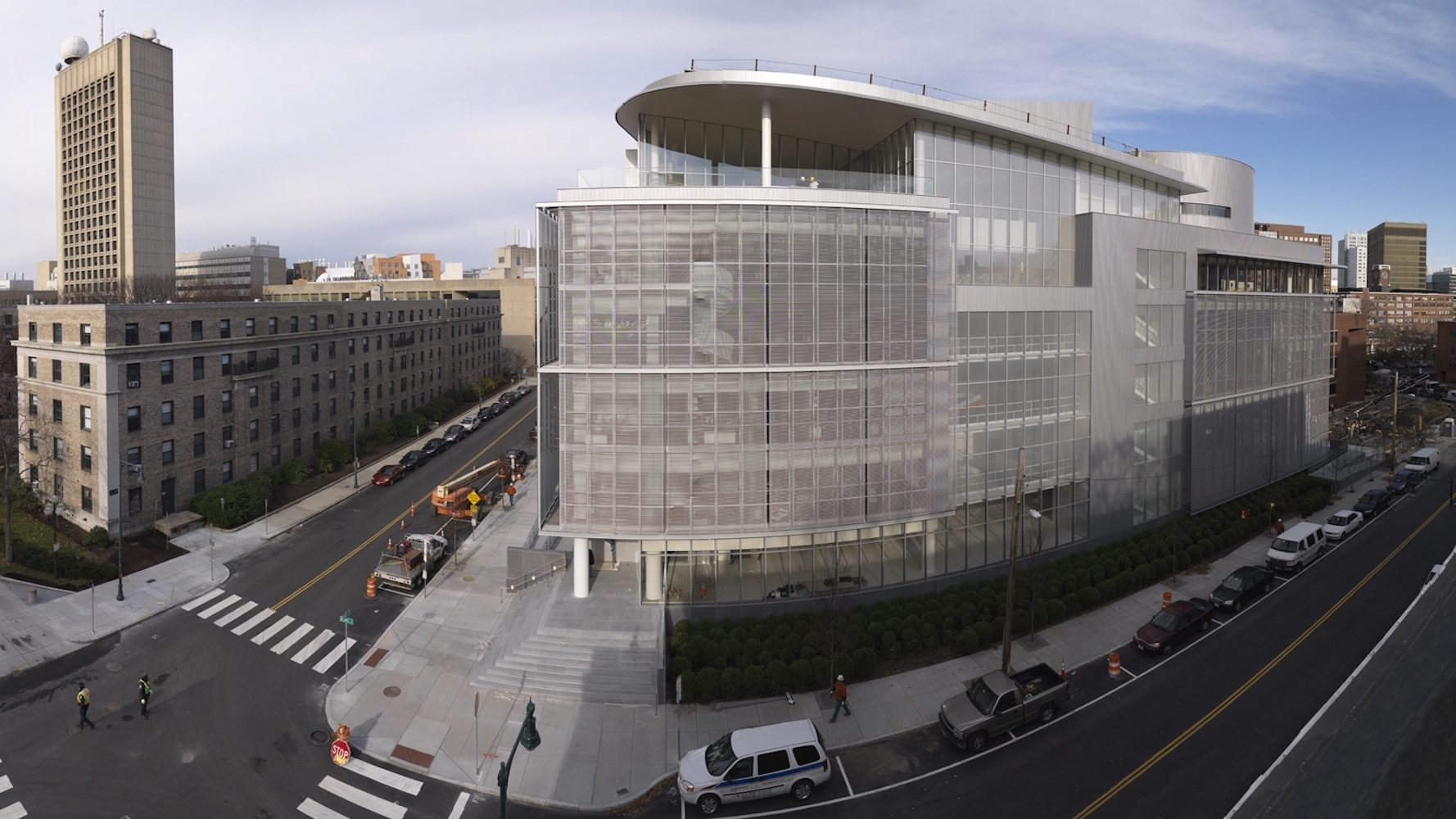
Project manager Simone Giostra oversaw the development and installation of the glass, steel, and aluminum curtain wall. (The side and rear facades are clad in Rheinzink—a zinc, copper, titanium alloy with highly uniform properties important in facades.) From the beginning, the challenges were daunting for construction of the entire building. There was virtually no staging area for equipment and materials. Deliveries had to be small and precisely timed. With little room to stage the erection of the facade, Barney Skanska, the concrete subcontractor, used special forms built on-site. Above the 14th floor, the contractor switched to a jump-form system from Doka, an international formwork company. The system is a self-supporting concrete formwork, anchored to the lower portion of the same concrete wall under construction. It can be erected without any additional scaffold or support from the ground.

The south-facing entrance facade is a complex assemblage of materials—high-strength concrete, architectural concrete, aluminum and glass fenestration, and steel cross bracing. The architectural concrete (8,000 psi) was to be visible through the curtain wall, so the interface between panel and concrete was critical.

 
Photos: © Michael Moran

The facade composition directly relates to the functions in the interior. The director's office (left) projects from the glass wall.

The fabrication and installation of the south facade was plagued by what can only be described as a clash of building cultures. The facade’s glazed panel system was fabricated by an Austrian company called GIG Fassadenbau GmbH, but the structure on which the curtain wall was to hang was built to American standards. “In Europe, the tolerances are much tighter than in the U.S.,” Giostra explains. “Whereas the panels were designed with a tolerance of 3¼16 of an inch, the concrete structure allowed for as much as 1-inch variance.” Furthermore, the design called for the architectural concrete to be visible through the curtain wall, precluding any workable but visually unacceptable solutions. Because of the discrepancy, the brackets connecting the curtain-wall panels to the concrete superstructure required a survey of the entire south elevation and fabrication of new steel brackets, which could absorb much wider concrete deviations.

It has been described as a puzzle by the engineers, the contractors, and the construction manager. It might be more like building a ship in a bottle, fashioned with European precision and American perseverance.

Page 2 of 6


ADVERTISEMENT
resources | editorial calendar | submit work | contact us | about us | call for entries | site map | back issues | advertise | terms of use | privacy notice | my account
© The McGraw-Hill Companies, Inc. All Rights Reserved