|
Client, architect, and Construction
manager must perform a delicate balancing act to shrink the
construction process and save time and money.
By Barbara Knecht
Creating team spirit
Within the design process, McConnell credited three things
that enabled NBBJ to deliver the design in eight months. First,
the use of three-dimensional computer modeling (see Digital
Architect, page 133) during the initial design made iterations
and revisions quick. Secondly, near the end of schematics,
the entire design team stopped what they were working on and
devoted two weeks to building an 1¼8-inch scale model.
The exercise engendered a cohesiveness in the team by giving
each member a thorough understanding of what they were making.
Third, a team structure was organized by programmatic building
areas through schematics and then reorganized by building
systems to complete the construction documents.
Whitehall-Robins Pharmaceutical
Research and Design Facility
Richmond
Architect: Ewing Cole Cherry Brott, Philadelphia
(James A. Wilson, project director and lab planner;
Don Jones, project manager and designer; Glenna
Dugan, project architect)
|

Date of completion: July 1998
Construction manager: Sordoni Skanska USA |

Photography: © Tom
Bernard |
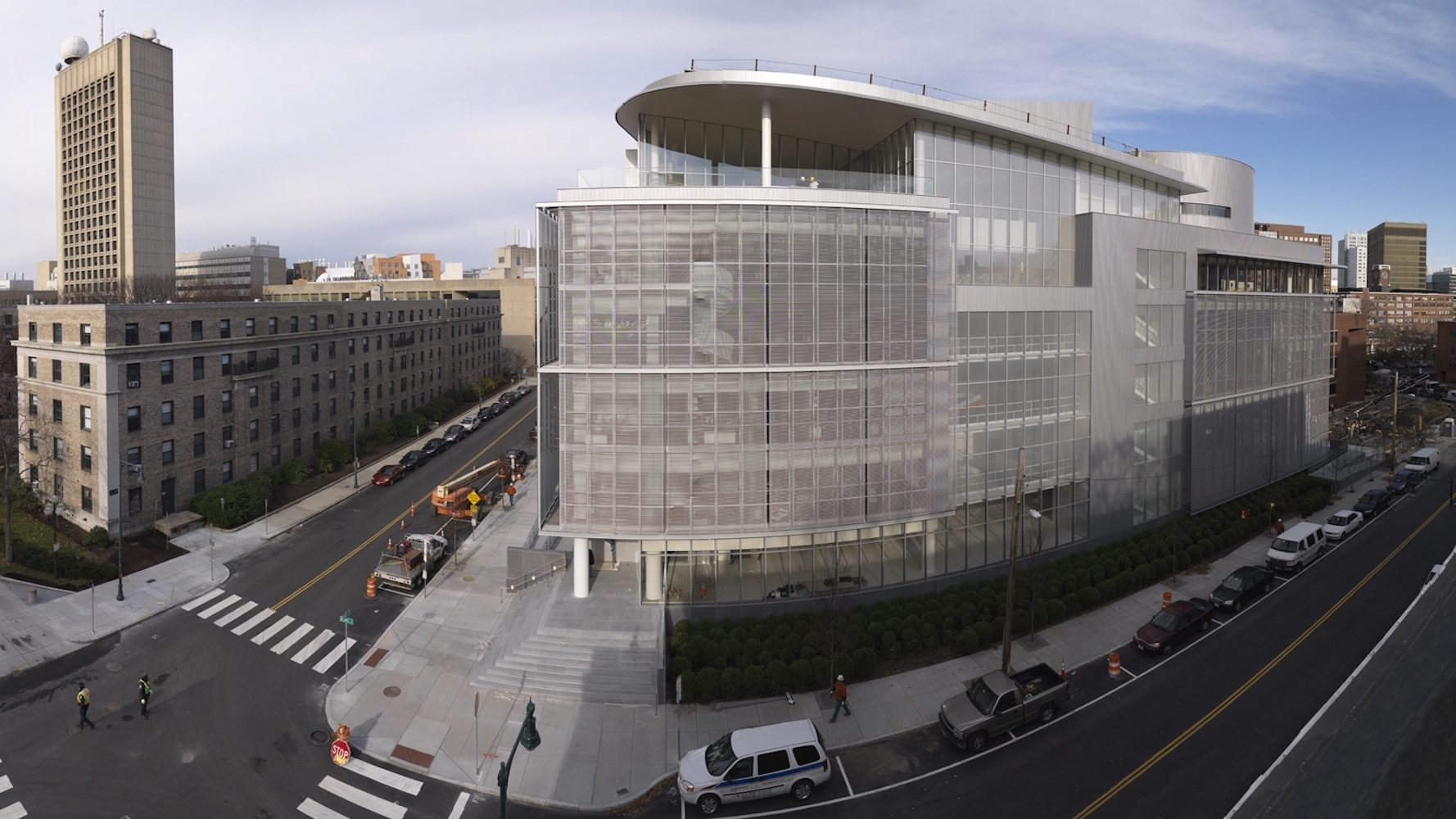
The Whitehall-Robins
project (above) was
an upgrade and expansion involving six buildings.
The overall project team was organized into four
subproject teams,
one of which was responsible for the laboratories
(left), in order to manage the fast-track project. |
|
It seems clear that those who are great proponents of fast-track
construction have excellent records on teamwork. Ewing Cole
Cherry Brott has reconsidered its organization. According
to Jim Wilson, We now put all the disciplines together
in the same studio so that they sit by project and not by
discipline. There is more speed in conflict resolution. We
have even given clients and construction managers space in
our studio if they want it, and this [convenience] is reciprocated
in the field.
As with NBBJs organization of teams of designers to
solve specific problems, Ewing Cole Cherry Brott broke down
the $75 million Whitehall-Robins Pharmaceutical Research and
Development project into smaller subprojects with a separate
project team, budget, and schedule for each. Faced with an
upgrade and expansion of six occupied buildings totaling 265,000
square feet and a 24-month schedule, the architects divided
the site into four separate building projects.
Greater field presence is the norm in fast-track projects;
it is still the fastest form of communication, and most architects
have a daily presence on fast-track sites to resolve issues
and coordinate the work with those team members in the office.
In the case of Whitehall-Robins, the on-site decisions were
typical field coordination issues, such as conflicts between
architectural space and engineering systems or unanticipated
design problems. But on-site presence meant that work was
never disrupted while waiting for decisions. Field directives
and sketches issued and logged into the Web site were immediately
and simultaneously available to contractors and the home office.
|