Ranch House
A cantilever stores water for drought-inflicted site
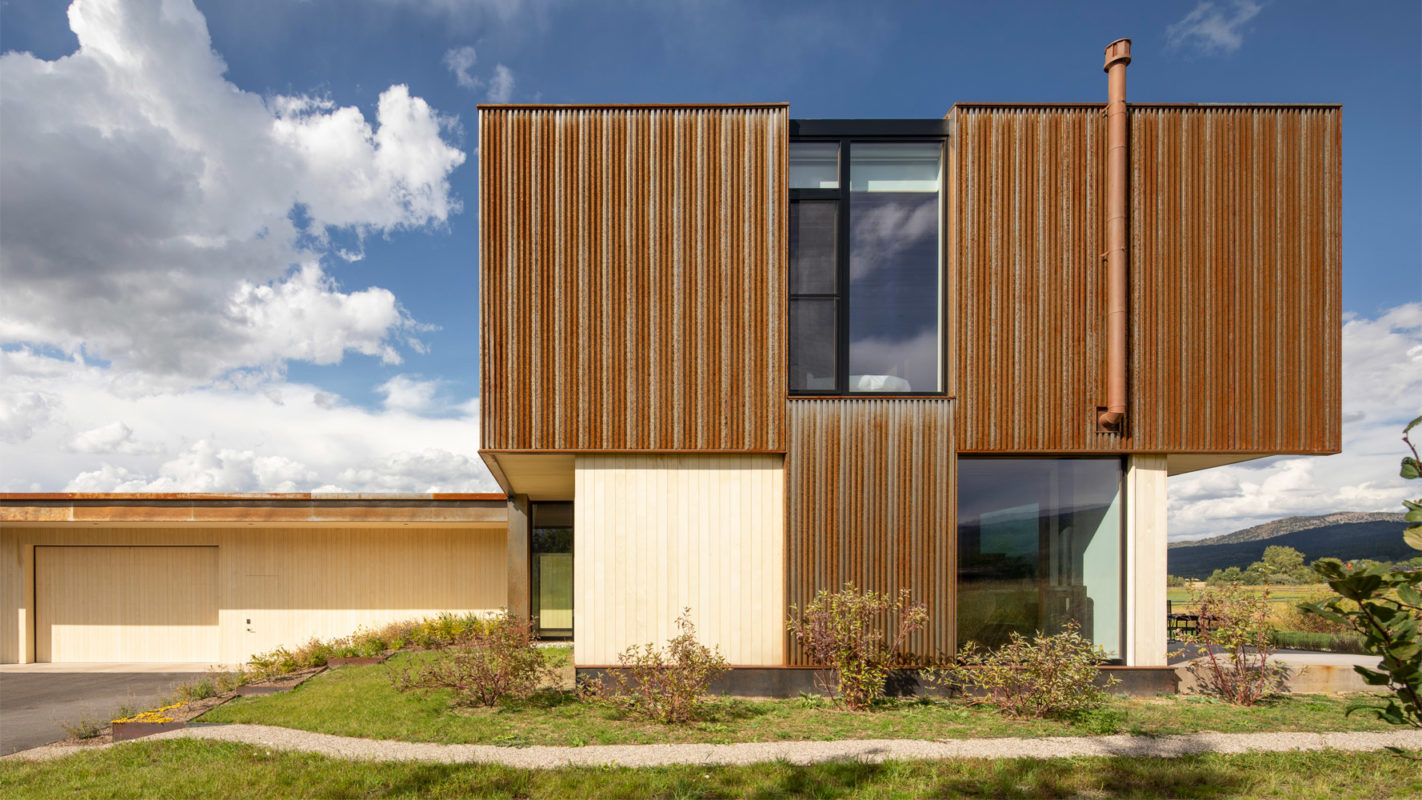
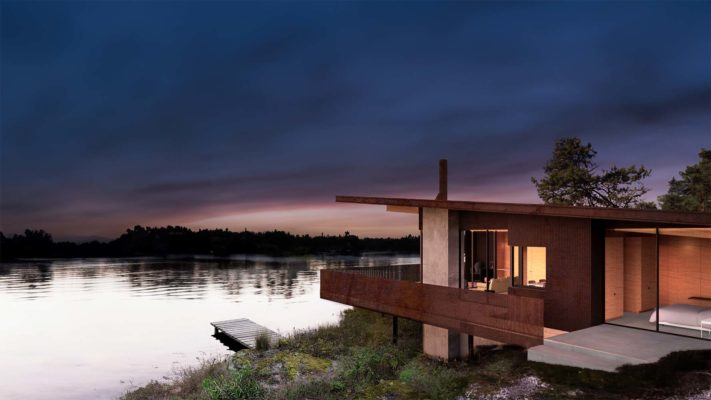
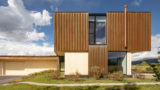
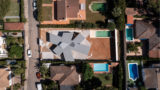
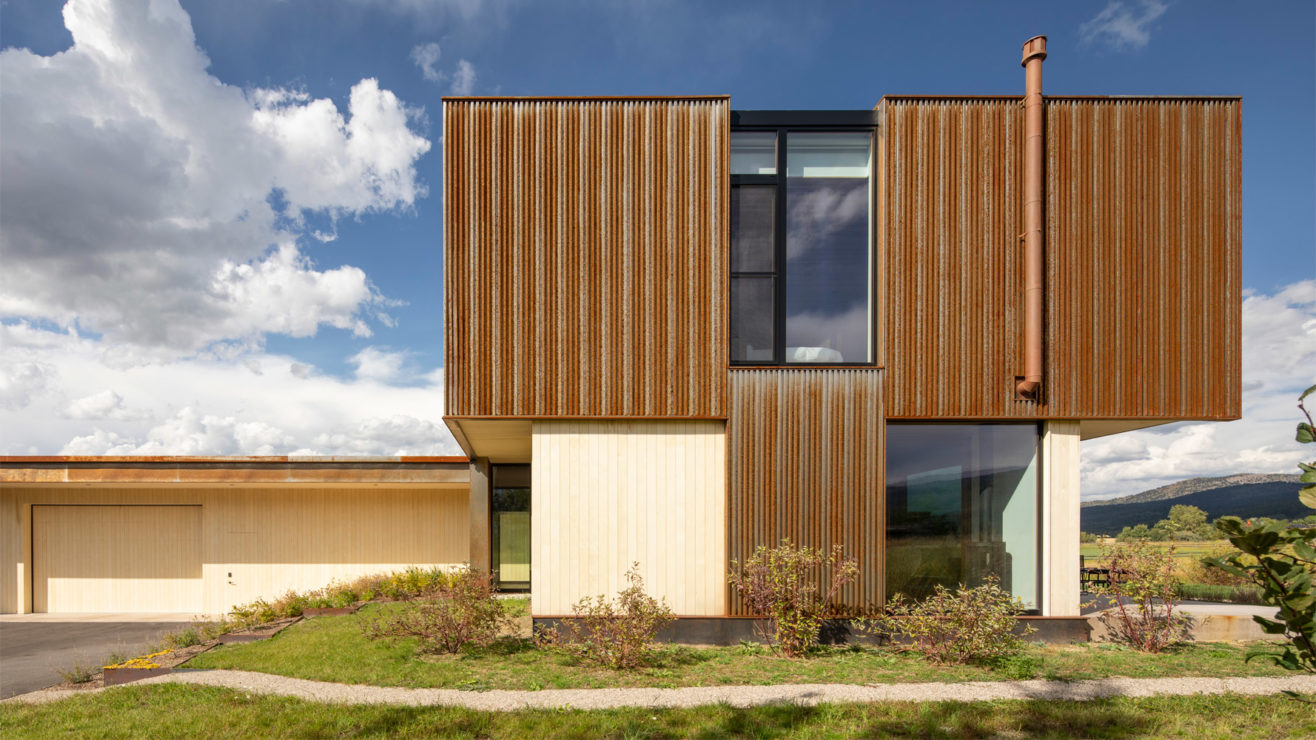
This design for a house on a Washington state ranch by Peter Macapia, the principal of Brooklyn-based Design Office for Research and Achitecture (DORA), applies his interest in the relationship of formal geometries and energy relations.
Based on what you have seen and read about this project, how would you grade it? Use the stars below to indicate your assessment, five stars being the highest rating.
Despite heavy snowfall during the cold winter, a quick evaporation in the long, hot summers leads to drought conditions. This house is predicated on integrating with its site in order to make the snowfall’s moisture last throughout the summer.
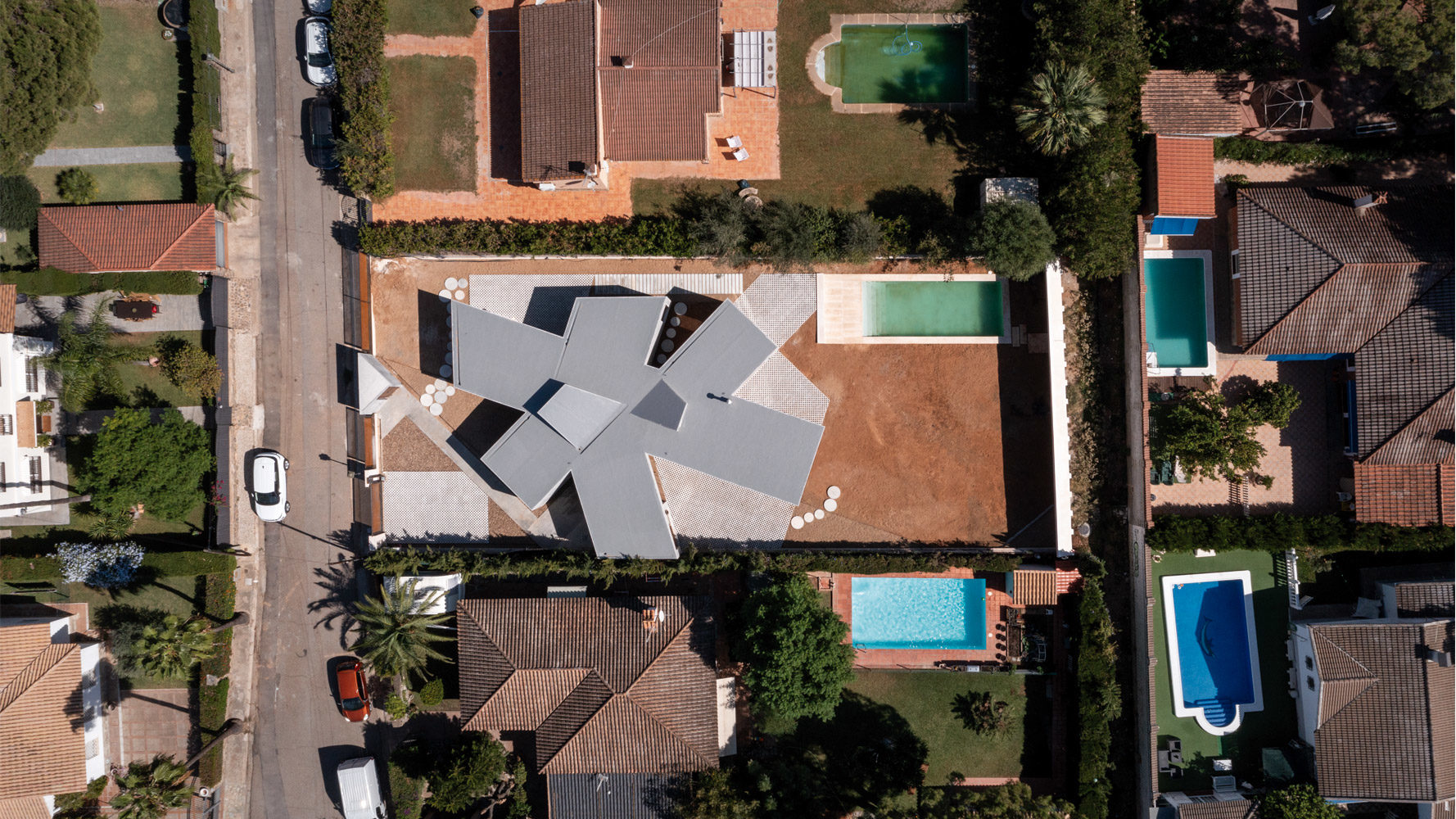
The house cantilevers from the sloped site, extending materially and ecologically from the landscape. A gradient of mixed rock aggregate approaches the house and begins to filter water before it reaches the folded double shell plenum envelope of the building. The aluminum and fiberglass roof and envelope act as a filter and water catchment system that deposits water into tanks underneath the house’s volume.
Those tanks not only store water, but also act as an evaporative cooling system during the summer, and a thermal modifier in the winter as the temperature of the water offsets the cooling in the house. They are spread large at the top to distribute the convection evenly.
The project is indefinitely suspended.
Formal name of project: Ranch House
Location: Carlton Washington
Total construction cost: estimated $80,000.
Owner: Texas Creek Ranch,Inc.
Gross square footage: 1,500 sq. ft.
Architect:
Peter Macapia
Design Office for Research and Architecture (DORA)
155 Remsen, no. 1
Brooklyn NY 11201
T: 646 309 2575
www.labdora.com