|
Friendsville, Tenn.
Atelier Hines Almy, architects
By Randi Greenberg
It all began with a letter. A couple
who own a steep-sloped, seven-acre site in the foothills of
Friendsville, Tennessee sent a query to the dean of the architecture
school at the University of Tennessee-Knoxville seeking his
advice to find the right architect for their future residence.
In the letter, the couple explained they wanted an architect
who would make efforts to integrate the house into the landscape.
"The dean knew that the topic was of much interest to
me and that is how this job came my way," explains architect
Dean Almy III of Atelier Hines Almy who, at the time, was
an associate professor at UT.
The empty-nest couple was clear about their needs. They handed
Almy and his partner Kelly Hines a seven-page document of
requirements for their future home. This list took into account
various aspects that ranged from spaces for their interests-including
photography and canning-to other practical matters such as
a low-maintenance exterior, handicap-accessible areas, and
a pool for hydrotherapy. Almy says, "Essentially, the
clients said to us 'Here are all the things we want. But as
the architects, you tell us what it should like."
The result is a T-shaped residence built at the apex of a
700-foot forested hillside with views of both the Smoky and
Cumberland Mountains. The program of the house clearly separates
the private and public. The private areas consist of the master
bedroom and porch/outdoor room on the main level and a guest
wing tucked below. "The guest apartment is cut into the
hill and easily accommodates visiting children and grandchildren,"
says Almy, "The space can be shut off when the couple
is alone." The public areas, also on the main level-the
kitchen, dining and living rooms, and pool-are placed horizontally
and linearly to these private spaces.
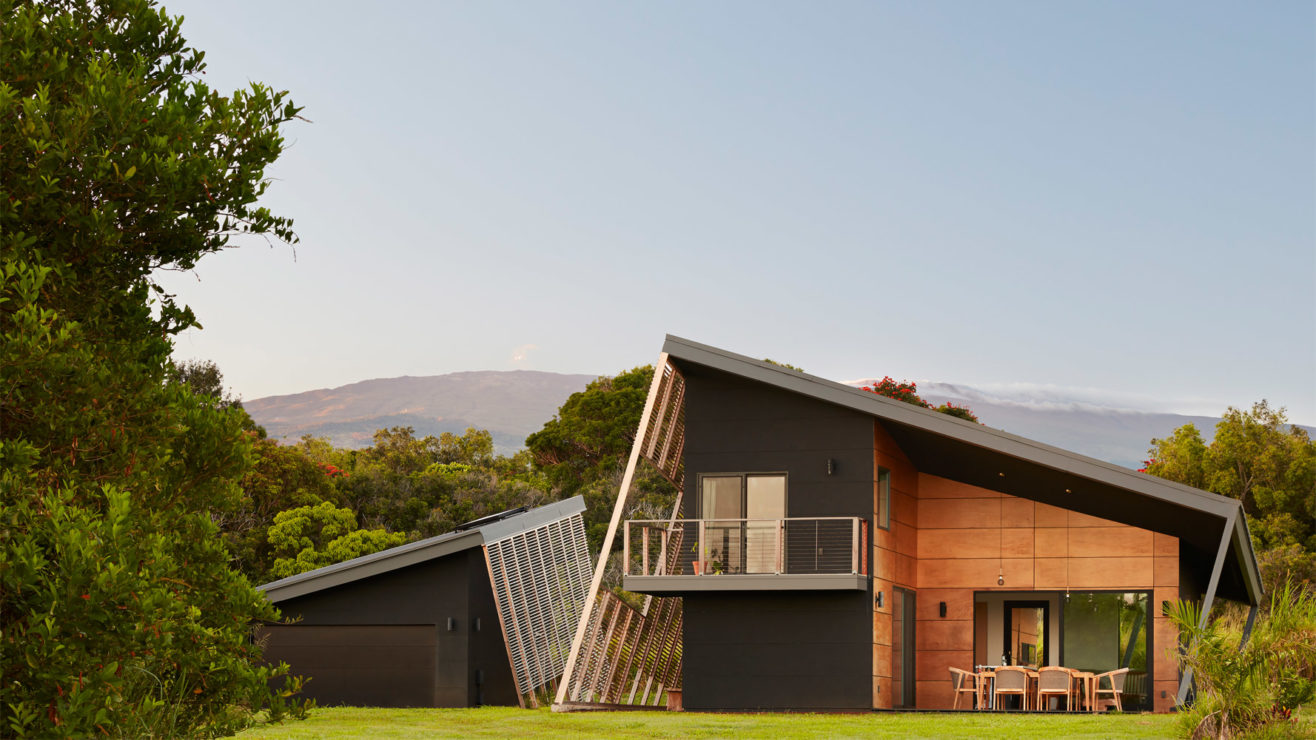
Capturing natural light and making use of passive solar energy
were key elements in the design of the home. The architect
says, "There is a clear relationship between the roof
and the angle of the sun. The cantilevered roof lets in light
and heat in the winter and shades during the summer."
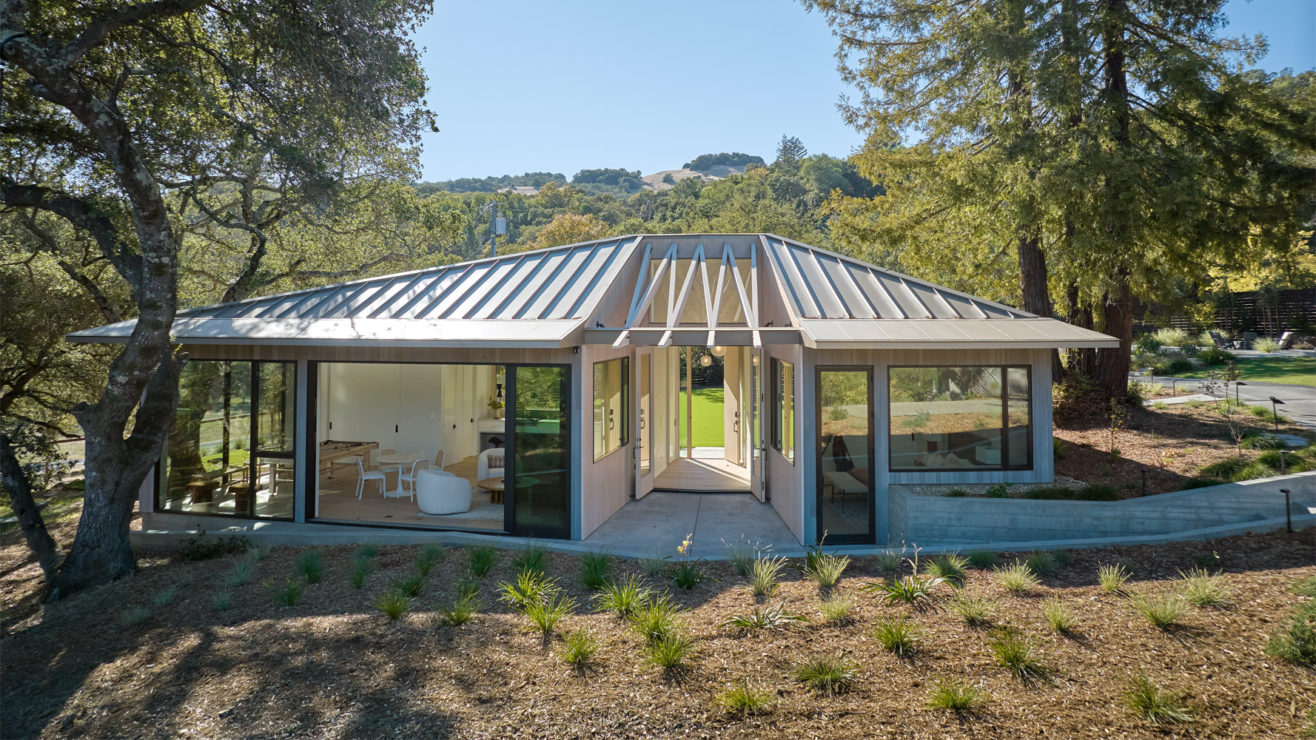
The western portion of the roof lacks the overhang since protection
from the glare is less of an issue with the setting sun. Hines
and Almy used polygonal panels in this area for enclosing
the indoor pool.
Attention to other aspects of sustainability, both in materials
and practice, were also important to the owners and architects.
Hines was fastidious in the research of materials for the
house, from the white cedar exterior to the bamboo floors
to the birch ceiling. Seven scuppers in the roof deposit rainwater
directly into the koi pond and from there is channeled into
the landscaped gardens.
Gross square
footage:
8000 sq. ft. / 6700 sq.ft. - conditioned
View complete
specs
|