|
Shiogama, Miyagi, Japan
Atelier Hitoshi Abe
Hitoshi Abe forges a box of dimpled Cor-Ten steel, painted white on the inside, as a home for the new Kanno Museum in Japan
 |

Photo: © Daici Ano |
| |
|
By Naomi R. Pollock, AIA
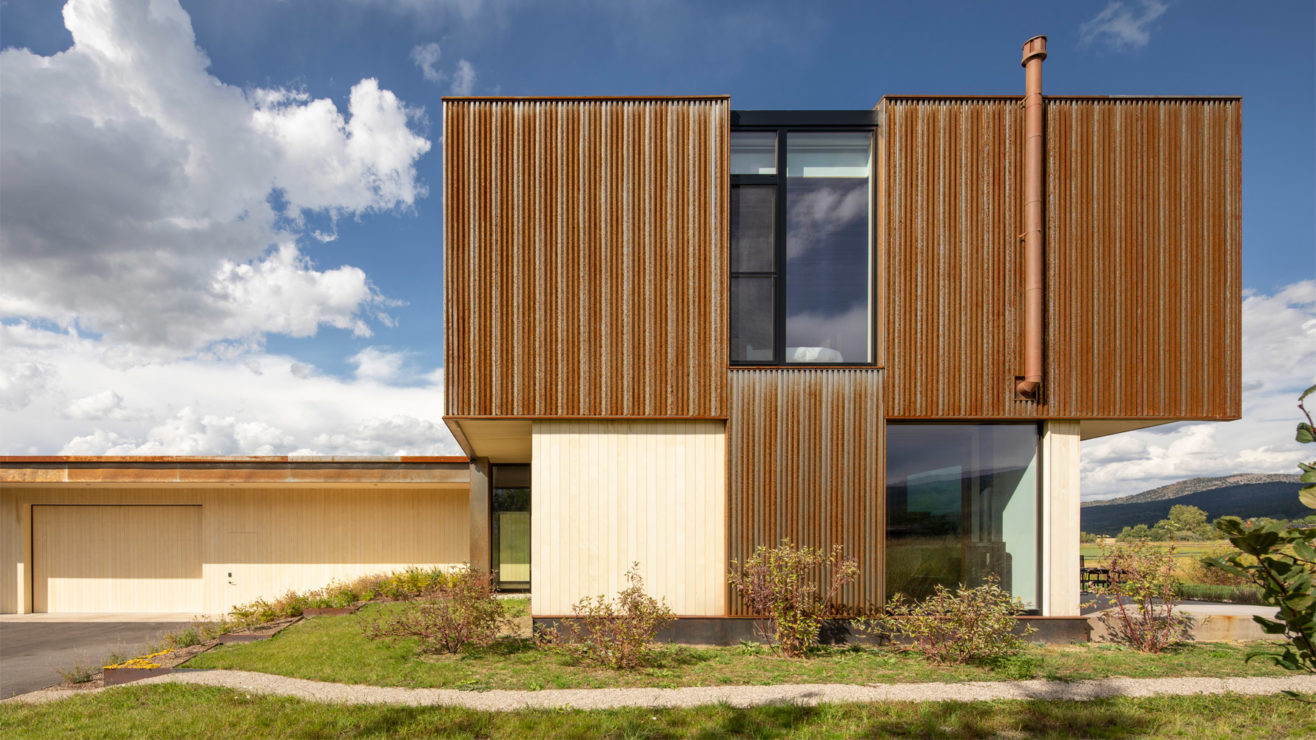
A stark metal box for metal sculptures, the Kanno Museum of Art (also known as the Shiogama Sculpture Museum [SSM], after the surrounding town) contrasts markedly with the expressive curvy structures that first thrust architect Hitoshi Abe into the limelight. This latest work, a Cor-Ten cube, dimpled with a pattern reminiscent of
diamond plate, contains a cluster of small galleries, inspired by soap bubbles but made of flat planes of steel. The brainchild of an art-loving, 70-something psychiatrist eager to share her collection, the 2,370-square-foot museum features eight modestly scaled figural works by such Western artists as Auguste Rodin and Henry Moore, plus temporary exhibitions. Adjacent to the doctor’s palatial 30-year-old, masonry home in the Sendai suburb of Shiogama, Japan, Abe’s sculptural building—residential in scale only—bears no resemblance to this or any other house nearby.
Single-family homes, small apartment buildings, and sporadic rice paddies border the narrow, circuitous road leading to the hillside site of the Kanno Museum. Perched on a grassy plateau and adjacent to an existing retaining wall, Abe’s rust-colored building rises from concrete foundations. With its ground level below the road, the cube stands apart from its densely built immediate surroundings. Yet the approach to this object building proceeds effortlessly from the street, across the museum’s small, cast-concrete parking area, and up a series of steps into the boxy volume. The main entrance, marked by an L-shaped Cor-Ten canopy, brings visitors directly into the museum’s top level.
Leaving behind the mundane streetscape, the front door opens onto a reception area—the entrée into a magically white world, textured exactly like the exterior. Here, floors become walls, walls become ceilings, and art becomes the focus. Steel stairs descend immediately to an exhibition space, the first of a spiraling sequence of irregularly shaped galleries on three levels, all contained within the building’s rectilinear enclosure. With slashed doorways and white, angled walls defining the three display spaces, the journey culminates on the building’s lowest level, with the largest gallery, a room intended for small concerts and art installations. From there, an elevator back up to the top completes the circulation loop, depositing passengers in a small vestibule, where glass floor panels allow glimpses of the galleries below. But what really draws the eye is a triangular window across the adjacent reception room, opening toward ocean views—one of the few points of contact between the otherworldly interior and the real-world exterior.
Unlike commonplace buildings, so often stacked in domino fashion along grid coordinates, the Kanno Museum has its own unique, internal order.
Want the full story? Read the entire article in our February 2007 issue.
Subscribe to Architectural Record in print, or get Architectural Record digitally

|
the People
Owner
Kanno Museum of Art Foundation
Architect
Hitoshi Abe + Atelier Hitoshi Abe
www.a-slash.jp/
3-3-16, Oroshimachi, Wakabayashi-ku, Sendai, Miyagi, Japan
phone: +81-22-284-3411
Engineer(s)
Structural Engineer: Oak Structural Design (Masato Araya)
Facility Design: SOGO CONSULTANTS, Tohoku
Consultant(s)
General Contractor:
Kajima Corporation
Takahashi Kogyo
www.kajima.co.jp
Photographer
Daici Ano / Fwd Inc.
mailing address: 3-3-17 RE-KNOW 2F Higashinihonbashi, Chuo-ku, Tokyo103-0004, Japan
phone number: +81-3-3668-7722
e-mail address: ano@fwdinc.jp
CAD system, project management, or other software used:
VectorWorks
www.nemetschek.net/
FormZ, etc.
www.formz.com
|
 |
the Products
Structural system:
Steel Plate + Reinforced Concrete (Foundation)
Manufacturer: Takahashi Kogyo(steel plates)
www.takahashi-kogyo.com/
Exterior cladding
Metal/glass curtain wall:
Type: Corten Steen Sandwich Panel (t=68) All welded, no paint finish.
Manufacturer: Takahashi Kogyo
www.takahashi-kogyo.com/
Concrete:
Type: Reinforced Concrete
Manufacturer: KAJIMA CORPORATION
www.kajima.co.jp
Metal:
Type: Corten Steen Sandwich Panel (t=68) All welded, no paint finish.
Manufacturer: Takahashi Kogyo
www.takahashi-kogyo.com/
Windows
Steel: Corten Steel
Kajima Corporation
www.kajima.co.jp
Doors
Entrances:
Type: (Corten) Steel Frames and Doors (No Paint)
Metal doors:
Type: (Corten) Steel Frames and Doors(No Paint or Urethane Paint)
Wood doors:
Type: Hunger Door
Sliding doors:
Type: Wood Door
Hardware
Hinges:
Type: Stainless Hinges
Interior finishes
Acoustical ceilings:
Type: Ceiling Steel (t=2.3) SOP Vacuum Ceramic
Cabinetwork and custom woodwork:
Type: Steel Counter
Paints and stains:
Type: Oil-based paint (Floor, Wall, Ceiling)
Special surfacing:
Type: Artificial Wood (t=12GP)
Resilient flooring:
Type: St Sandwich Panel Dustproof Paint
Lighting
Interior ambient lighting:
Type: Ceiling Light
Manufacturer: Toshiba
www.tlt.co.jp
Downlights:
Type: Ceiling Light
Manufacturer: Toshiba
www.tlt.co.jp
Task lighting:
Type: Spot Light On Lighting Rail
Manufacturer: Yamagiwa
www.yamagiwa.co.jp/
Exterior:
Type: Spot Light, Foot Light
Manufacturer: Yamagiwa
www.yamagiwa.co.jp/
Type: Upper Light
Manufacturer: Matsushita Denko
www.mew.co.jp/
Controls:
Type: Dimmer Switch
Manufacturer: Matsushita Denko
www.mew.co.jp/
Conveyance
Elevators/Escalators:
Type: Elevator(Electric 3person 20m/min)
Manufacturer: Mitsubishi Hitachi Home Elevator
www.hitachi.com
Plumbing
Water Supply:
Direct Connection,
Hot Water Supply: Local Supply,
Drainage: Natural Flow (public drainage)
Sinks:
Manufacturer: T-form
Toilets:
Type: Low Tank
Manufacturer: INAX
Faucets:
Type: Single Bulb, Mixed Bulb
Manufacturer: Fuji Design
www.fujid.com
TOTO
www.totousa.com
CERA
Other:
Type: Air Conditioning: Duct Type, PAC Heat Pump (cooling) Air Conditioning |
|