Philadelphia
Rafael Viñoly Architects
IV. The Acoustics
What follows is an interview with
Russell Johnson, of Artec Consultants, the acoustical designer
of the Kimmell Center for the Performing Arts, by Charles
Linn, FAIA. Mr. Johnson is widely acknowledged as one
of the worlds leading theater design consultants and
acoustics specialists. Click here fo a complete listing of
the people and products behind
in this project.
Architectural
Record: There has been a great deal of discussion about
the "Philadelphia Sound," and whether it will still
be heard in the new hall. Can you explain what that is?
 |
|
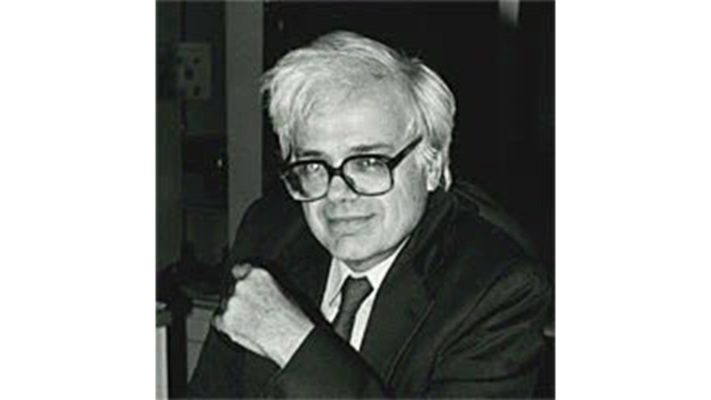
Russell Johnson
Photo Courtesy Artec Consultants Inc.
|
Russell Johnson:
The players love to talk about the Philadelphia Sound.
The Academy of Music, where the Philadelphia Orchestra has
been playing, is a magnificent building. It is a clever room,
in that they squeezed a tremendous seat count into a small
spaceit is an opera house. There are people everywhere,
from the floor up to ceiling, from the proscenium right around
to the proscenium. To improve the acoustics they put a concert
shell into it, made of wood about 3/16 of an inch thick. The
place is massively absorbing, and dreadfully designed, but
they worked in it for decades. What Leopold Stokowski and
then Eugene Ormandywho conducted the orchestra in a
very similar waydid to overcome the lack of reverberance
in the roomthis comes from legendthey encouraged
the musicians to play in a completely unusual way.
I heard one musician say back in 1958,
"we were taught at the end of a note you take the bow
across and release the pressure a little bit and we simulate
acoustical reverberation by the way we handle our bows"!
They were taught never to bow in unison, it was every man
for himself, which gives a kind of fuzzy sound. Again, this
was to compensate for utterly too much clarity at the Academy.
Of course when they went to Carnegie
Hall, and played the same way they did at the Academywhere
they were trying to overcome a somewhat dry, weak acoustical
situationthey played exactly the same way. The combination
of that playing plus the good acoustics of Carnegie, made
a wonderful sound. It made the reputation of the Philadelphia
Orchestra.
A.R.
Can you explain how the acoustics of the new concert hall
work?
 |
|
Click images for
larger view.
|
R.J. Somewhere
back around 1958-1962 I came up with the idea of making both
multipurpose auditoriums and concert halls with quite a bit
of acoustic adjustability, using things I kind of invented.
Many of them were used years back in isolated placesit
wasnt as if I was manufacturing them afreshbut
I came up with them before I knew of some of the old examples.
Here, we used three architectural design features. First,
the hinged panels. They can open up to the acoustics control
chamber, or close to make a solid wall around the perimeter
of primary audience chamber. If you want to increase the reverberance
you open the doors, and let the sound energy out into the
chamber. There, it reverberates and mixes with the sound from
the stage to give you the sound youre looking for.
Over the stage there is a three-part
canopy system, each part can go up and down independently.
This has a tremendous impact on changing the acoustical environment.
The third feature is to be able to put lots and lots of fabric
everywhere. There are closets for it, and its all mechanized,
so you can store it or you can bring it out into the inside
primary chambers.
We put all of these features together
in a kind of preliminary design. We laid out where all of
the tiers were; how many seats were in each tier; where all
of the seats in each of the tiers were, and where the organ
chamber was. We designed that completely, and presented that
to the building committee and Mr. Viñoly in the form
of a model, and drawings. As Mr. Viñoly was working
on it, he began looking for something new and exciting. He
decided to take this basic design, and make it in the shape
of a cello. Now, every surface is curvy, all of the balcony
rails curve in and out in a sinuous way, the ceiling is swooping
and rising and fallingso this simple acoustical design
has been transformed into a completely different sculptural
design.
The advantage of doing it in a simple
way, as we did in the beginning, is you can use the previous
15 halls that are something like it as your model. But if
all of the sudden you have a completely different architectural
approach. You cant go anywhere in the world to and find
an example of that to study. And I can tell you that studying
it in a computer or a scale model is fantastically difficult.
In effect, Rafael, presented us with a tremendous challenge,
but I think that the result is an extremely handsome room.
See the the People
& Products behind this project
|