parkit here
Applying vision to modest materials and a tight budget, archimania energizes a humble, but ubiquitous, building type.
All airports, whether new or a hodge-podge of ad hoc additions, have the same urban condition around their edges—acres of asphalt and concrete where tens of thousands of cars occupy 9-by-18-foot boxes in an endless grid. For the most part, airport parking lots and garages do not benefit from any architectural intervention and are minimally differentiated by letters and numbers.
Based on what you have seen and read about this project, how would you grade it? Use the stars below to indicate your assessment, five stars being the highest rating.
Memphis International is no exception: When travelers exit the airport, they pass through a visual wasteland. The owners of parkit here have been in the car business for a couple of generations. They had hired a local firm, archimania, to design their Infiniti showroom in Memphis, so they knew firsthand the firm’s talent for renewal and reinvention on a shoestring. One would expect a showroom where luxury automobiles are to be displayed to require a certain amount of architectural finesse, but the idea of putting design effort into a parking lot at the airport might seem counterintuitive. The owners gambled that bringing good design and amenities to an industry not known for either could distinguish their company from all the others and draw business to it. They challenged archimania to figure out how to do it.
The program required in part new construction, in part adaptive reuse of a vacant and dilapidated car dealership. In order to distinguish itself from the bare-essentials offerings in the area, the client decided to add value to the business by providing unusual customer conveniences within a visitors’ center: a café, executive center, dry cleaning, and free Internet access. The program called for automotive services in an adjacent structure. Here, customers could choose from a menu of amenities—car washing, complete detailing, and oil and filter replacement.
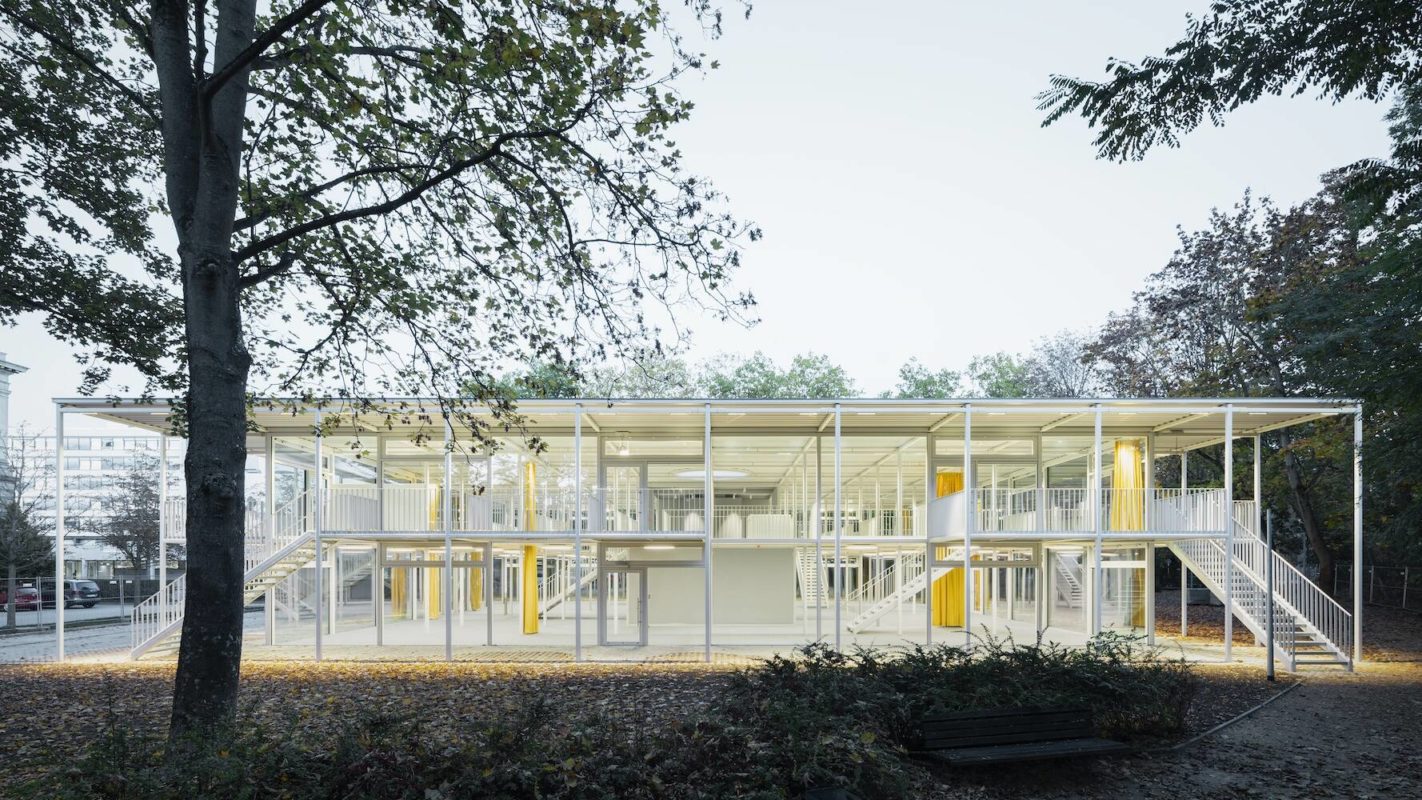
The architects demonstrated to the client that the existing shop buildings could be reused and converted to covered parking. They then devised a two-component strategy for the new construction. The first component involved the erection of a long Kalwall partition to screen the existing buildings during the day. At night, the Kalwall expanse is dramatically backlit, acting as a beacon for parkit here’s around-the-clock operation.
Formal name of building: parkit here
Location: Memphis, Tennessee
Completion Date: 2007
Total project cost: $3.86 million
Size: 73,750 sq.ft.
Client:
JWEACE/parkit here
Architect:
archimania
|
|
Want the full story? Read the entire article in our May 2008 issue.
Get Architectural Record digital with free bonus content not found in the magazine!
Order back issues—complete your library!


Sign in to Comment
To write a comment about this story, please sign in. If this is your first time commenting on this site, you will be required to fill out a brief registration form. Your public username will be the beginning of the email address that you enter into the form (everything before the @ symbol). Other than that, none of the information that you enter will be publically displayed.