|
The inspiration becomes reality
The architects involved in the library initiative knew they needed to understand the students before they could design for them. Calvin Tsao, AIA, a partner at Tsao and McKown Architects, who has completed five libraries to date, says: “We examined what the word ‘library' means today, technologically and sociologically, and then sought to define the word for this particular group of people. We deconstructed and reevaluated the purpose of the library specifically for the students, to reinsert learning into there in a way that would be relevant to them.”
From the beginning, a stream of donations—elicited by Tanner—sprang forth, including one million books each from Scholastic and HarperCollins, paint from Benjamin Moore, computers from Apple, advanced education (Master of Library Science degree programs) for the librarians from Syracuse University, graphics from Pentagram, and other gifts in kind. Even with donations and modest spending, the budget for the design of each library typically runs $400,000 to $500,000, a hefty commitment for schools with limited resources. But the Board of Education has committed its ongoing support—essentially in the form of a two-to-one matching grant—putting in two dollars for every dollar contributed by Robin Hood.
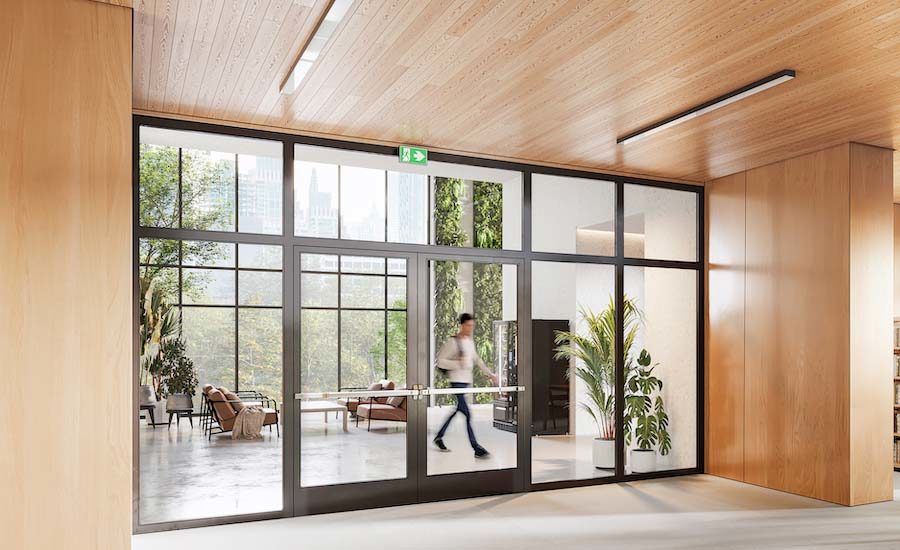
The architects learned that the old-fashioned definition of libraries as quiet, private places to read has morphed over time into a notion of settings for collaborative learning. They serve as gathering spots, where kids can work together on computers and watch or deliver presentations. Libraries have become media centers where technology and the Internet provides access to the world at large. Public performance and interactive learning appear to help the kids develop confidence. For that reason, the libraries feature theater areas or town halls, as Tsao refers to them, a deliberate attempt to center the space in a traditional way and use design as a learning device.
|
The team of architects from the first round of libraries established parameters to guide later designs. They agreed on the need to accommodate librarians/teachers leading an active class, students giving performances, and individuals studying alone. Since each space comprises no more than 2,000 square feet, flexibility became a key design component. Many areas have multiple uses facilitated by custom-made movable furniture and shelving. Each library required a minimum of four computer stations, wireless access, and storage for 10,000 books. While the design in each instance is unique, the aim has been to standardize the program and develop an economy of means.
|