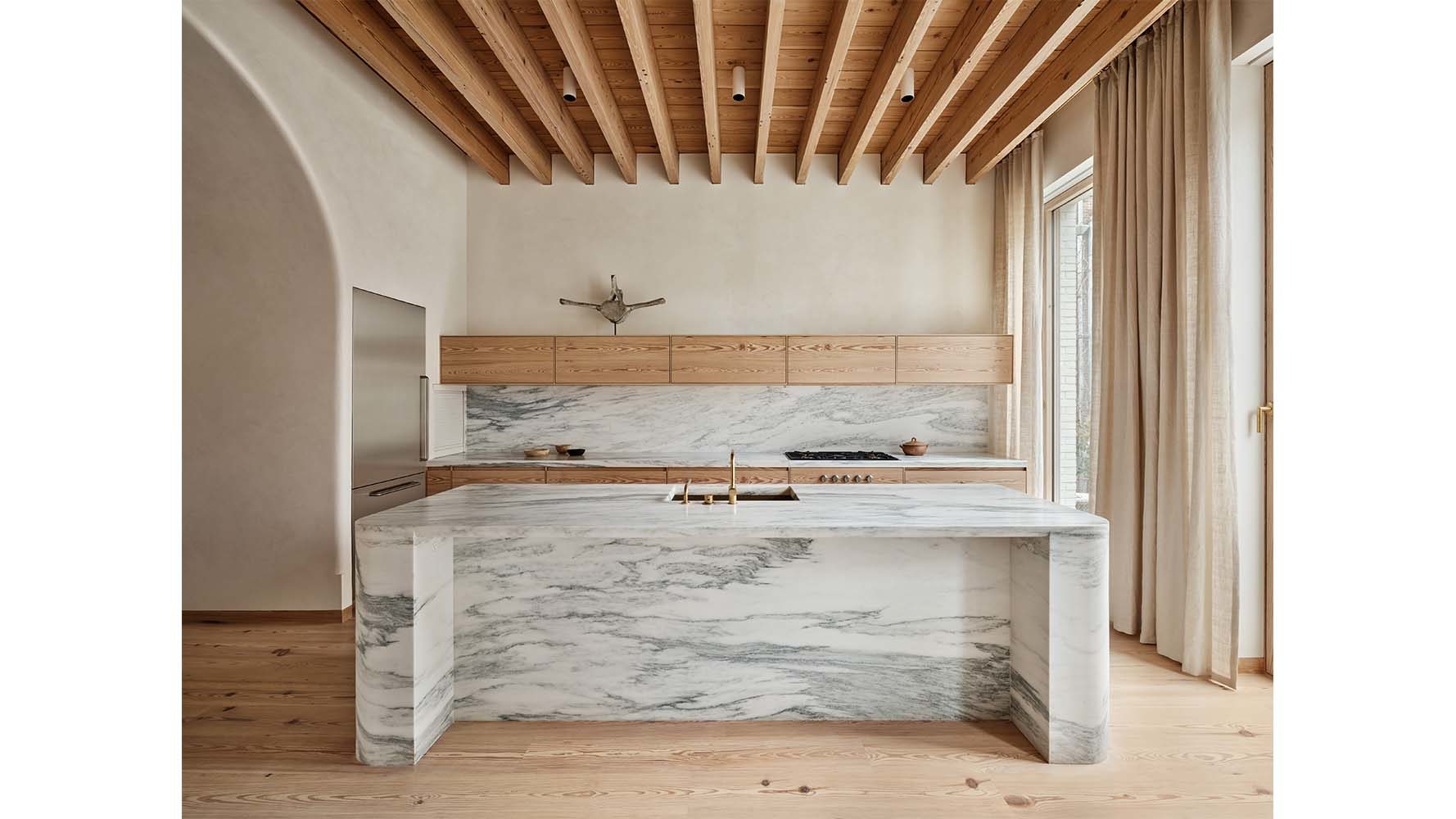
Photography: © André
Souroujon |
|

By
Robert A. Ivy, FAIA |
No branch of art covers
a wider field than architecture; no branch ministers
more to the comfort, luxury, and convenience of the
people; yet none receives less attention and encouragement
from public sources in America. While those salient
points might have been written yesterday, they were
penned by a group of young architects on January 18,
1881, who set out to redress a list of grievances. The
group, which included Cass Gilbert, was called the Architectural
League. Initially rooted in New York City, it has grown
and prospered, sharing the story about architecture
with the larger culture. We celebrate its 125th anniversary
this year.
While associations such as
the AIA primarily and justly concern themselves with
professional matters, the league has always held the
art of architecture at its core: Earliest meetings consisted
of sketching sessions that would ultimately result in
exhibitions of members work. Along the way, the
organization expanded its brief to include lectures,
symposia, competitions, and social events, never abandoning
the understanding of its central mission. Hugh Ferriss,
architect and delineator extraordinaire, captured an
essential organizational goal in 1944: I should
think this League would be proud to assist in the reintegration
of two of Mans greatest impulses: the impulse
to make things work and the impulse to make them beautiful.
Rosalie Genevro, the organizations executive director,
echoes Ferrisss statement when she explains that
the league talks about New York, not as an advocacy
group, but in thinking about how to make New York more
beautiful. Along the way, the league has examined
new forms of housing, discussed the role of skyscrapers,
considered what makes a productive park projectall
of which resonate with the early years,
she says. The discussions often prove as crucial as
the work, leavening all our thinking for subsequent
projects.
Furthermore, the league has
always served as a meeting ground for people outside
the formal discipline of architecture, including planners,
graphic artists, writers, and patrons of the arts. Here
has been a place where the educated public could encounter
this seemingly esoteric subject; where it could be demystified
for them in the process; and where they could be introduced
to real architects in high-minded symposia or rambunctious
gatherings, such as the leagues fabled Beaux-Arts
Ball.
Architectural Record,
among other organizations, has maintained a strong relationship
with the league, providing members and leaders of the
it, from the early days of two-term president Russell
Sturgis (records esteemed 19th-century critic)
until today. Current deputy editor Suzanne Stephens
and contributing editor Michael Sorkin continue the
tradition, serving as longtime board members.
It might be tempting for
readers outside of Gotham to wave off the league as
parochial (New Yorkers do tend to talk to each other),
if its activities and programs didnt reach beyond
the five boroughs. On the contrary, architects in San
Francisco often know just whom the league has chosen
for its current season of Emerging Voices,
a vital system of recognizing significant new talent
in North America, or its Young Architect program, for
example, which highlights the work of architects who
have finished school within the past 10 years.
Current president Wendy Evans
Joseph notes the leagues commitment to the
larger community, which has attracted international
interest, as well as the fact that the league is opening
itself to the globalization of architecture. Though
she credits the league for helping to heighten public
awareness, that doesnt necessarily translate
into public funding. There is homework left to
be done.
We recognize the work of
organizations that are educating and involving the public
in architecture, such as the National Building Museum,
the American Architectural Foundation, and the Chicago
Architectural Foundation. January 18, however, signals
a unique moment, when 125 years ago the art of architecture
took a bold step forward. So to the young architects
who kicked it off then, to their progeny who continue
the tradition, and to all who love architecture, we
salute the Architectural League.
Join Robert Ivy as he jots down
notes on his travels and the state of architecture today
in the Editor's Journal.
Check out our index
of past editorials.
If you wish to write to our
editor-in-chief you can email him rivy@mcgraw-hill.com.
|