|
December 12, 2005
Notes from Robert Ivy, FAIA, Editor in Chief
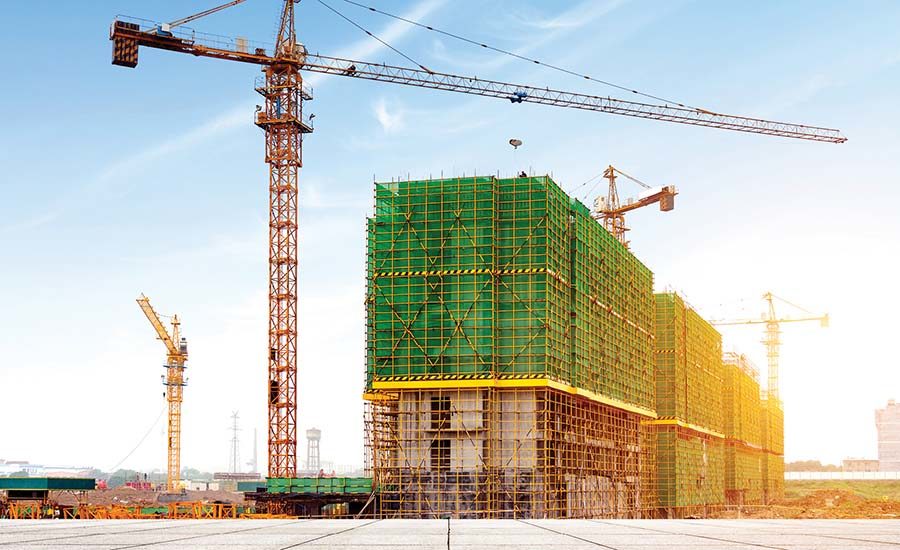
Where did all the cranes come from? Aren't
they all in China these days? How can one city, one place,
cram so much construction onto one single street? Those are
the kinds of questions that inevitably crowd into your mind
on a visit to Dubai, a city on the rise. Another word that
the frenetic activity suggests is bubble, since few places
on the planet would be able to sustain such a level of building.
So much construction is under way that the microclimate has
been affected. The atmosphere, formerly known for its crystal
clarity, now wears a veil of dust, all stirred up by the building
and earth moving, which takes place 24 hours each day.
Searching for an analogy, trying to compare
Dubai to another, similar city proves fruitless-the closest
comparable city in a desert built along a strip highway, Las
Vegas, seems to be pandering toward ersatz glitz. Dubai, however,
has been freshened by the sea, which bathes the land in a
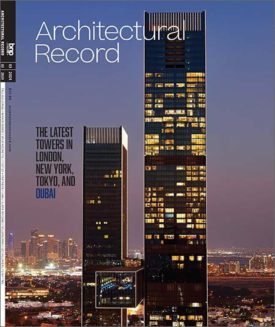
soft morning light. The buildings, while extraordinary, create
their own form of surrealism: think Beijing monoliths, 40
stories tall, lined in a new palisade, one after the other,
banked at their flanks by Palm Springs bungalows. It's an
incongruous, yet oddly affecting mixture. All upscale; all
the receptacles of global wealth, like so many piggy banks
in a row. That's Dubai.
The city, the most visible of the United
Arab Emirates, has transformed itself in 20 years. Its airport,
designed by SOM and currently under expansion, now serves
as a hub for transit between Asia, Africa, and Europe-a contemporary
souq in its own right selling gold, frankincense, and Gucci.
A 15-minute ride finds you on Sheikh Zayed road, the main
drag, where the hotels form their amazing procession. Here
a gaggle of automobile showrooms; there, an immense shopping
mall, replete with its own internal, snow-covered ski slope.
Yes, ski slope. When the summer temperature hits over 100
degrees, everyone heads inside, and they need something to
do besides shop.
Why are they flocking in? The word on
the street seems to be a combination of factors: the zest
that comes from late fall until spring, populating the beaches,
the proximity of those beaches to Europe (closer than the
Bahamas or the Caribbean), the luxe of new hotels, such as
the flagship Burj al-Arab, where the rooms go for $1,200 per
night, the nightlife, the food (think fresh prawns and sea
bass). Also the stability of the Emirates, which have become
havens for global finance, with billions pouring through the
pipelines, and that's not all oil money. The primary factor
may be the ability of investors (non-residents) to own land,
a relatively new phenomenon.
Dubai prospers as a result of multiple
convergences, and is building. At the extremities, near the
marina, a warren of concrete towers near the sea rises like
sandcastles, overtopped by spidery cranes. Construction workers
from overseas squat in the shade, or run to catch a nearby
bus. (Residents of Dubai don't do manual labor, relying on
workers from Sri Lanka, the Philippines, or Pakistan to do
the real work: the ratio is four imported workers to one native-born
citizen). Most of the apartment towers appear near the topping
out point. A Sheraton hotel, built in the earlier boom of
the 1970s, had anchored the marina district as a solitary
outpost, but no more.
The downtown lies at the opposite extreme,
lining Dubai Creek, (Khor Dubai) which more accurately might
be called an inland bay. Here the city achieves real urban
density. Across the creek sits Deira, heart of the old town
with its souqs. The Bastakia Quarter, where wealthy Iranians
settled in the early 20th century, contains the wind-tower
houses they built, currently under renovation. Here you feel
some sense of the past.
After two decades of stretching out longitudinally,
with no real planning in sight, the city is discovering its
cross-axes. Major developers have taken large parcels of land
off Sheikh Zayed Road and are introducing planned communities
that range from historicist renderings of Arabian towns to
the ultra-modern. At the forefront of the latter belongs the
Burj Dubai, the high-rise development that will include the
world's tallest building, again designed by SOM, and currently
under construction. While its height remains undisclosed,
the plans within the mixed-use project illustrate offices
as high as 141 floors, and that is shy of the overtopping
tower that will crown the structure.
A day, or a weekend, in Dubai allows
a feel for a city jamming forward toward the future. The atmosphere
is giddy with growth, as if the visitors cannot fill their
shopping bags quickly enough. The question for the future
is whether the bubble we are all watching expand will expand
even further, or will it burst?
|