|
February 15, 2006
 |

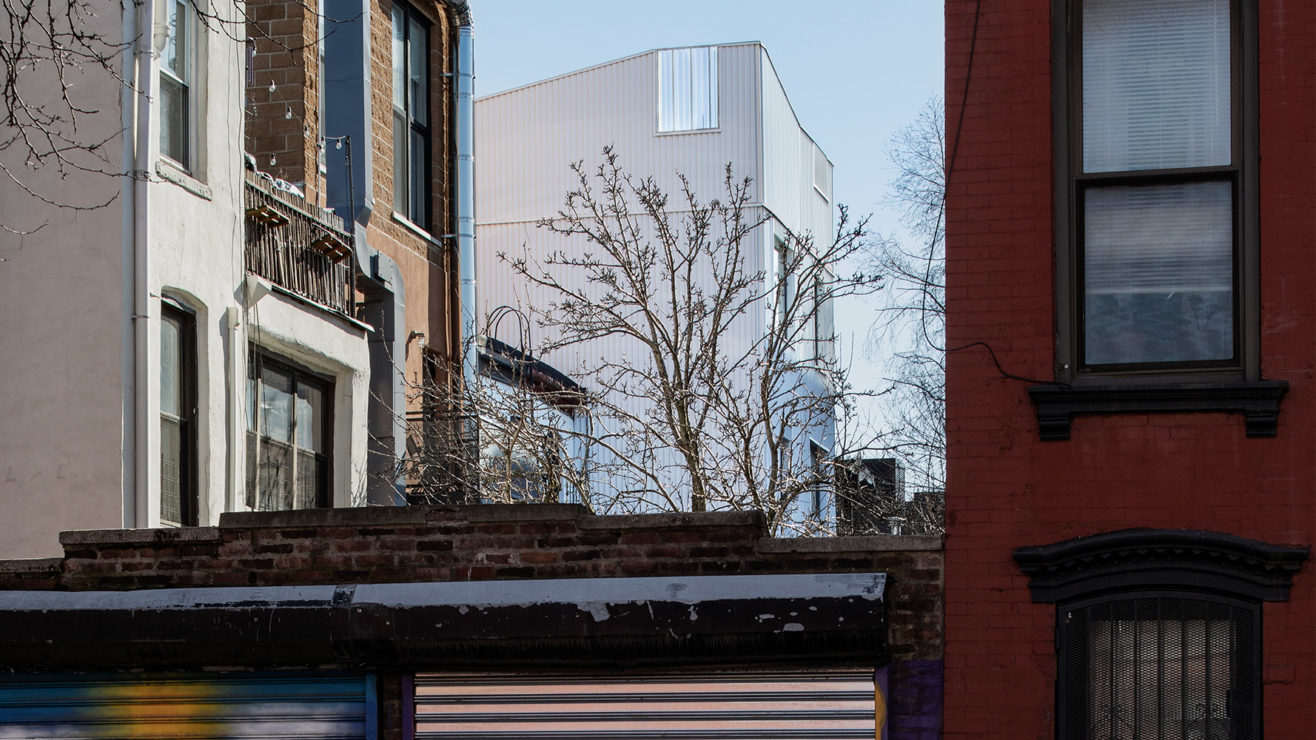
Images of Mildred Bennett's
house in the Holy Cross neighborhood of New Orleans. She
plans to move back in shortly. |

Images courtesy Mary Fitzpatrick,
Preservation Resource Center of New Orleans |
Many Katrina-evacuated homeowners who
thought theyd lost everything are finding their homes
are salvageable, especially older ones.
Last Thanksgiving, for example, volunteers
from the New Orleans Preservation Resource Center (PRC) cleaned
out an 1884 shotgun house in the Holy Cross neighborhood of
New Orleans, a less-damaged part of the notorious Lower Ninth
Ward. The removals revealed streaked warm orange and blue
board-and-batten walls and the sturdy wood floors. Built of
dense pine and cypress, theyve come through the flooding
unscathed. The work was sponsored by the PRC, and supported
by the National Trust for Historic Preservation, to show that
some of the citys oldest houses are rehab candidates.
According to spokeswoman Sue Sperry, PRC with a combination
of paid and volunteer labor, should be able to get 82-year-old
Mildred Bennett back into her home for $40,000. Progress now
only awaits the restoration of electricity and reliable supplies
of water to the neighborhood.
For the many homes that have not suffered
significant structural damage, a cottage industry of contractors
and volunteers has grown around gutting out houses:
ripping out water-soaked linoleum, carpet, plywood floors
and fiberboard cabinets; tearing down sheetrock (to above
the mold line anyway), and often throwing out doors and windows
to dry out moldy studs, which rarely suffer from flooding
alone.
These now-see-through houses are ready
for rebuilding, but homeowners often must battle with insurers
about wind damage (generally covered) versus flood damage
(either not covered or only partly covered). Others have to
fight red tagging, which denotes that damage is
greater than 50 percent, and means they cannot rebuild except
above FEMA-mapped flood levels. Unfortunately FEMA has yet
to produce the maps.
Another cottage industry has built up
around getting the damage estimates reduced to below the 50-percent
threshold that requires compliance with whatever those new
flood elevations turn out to be. The red-tagging, says PRCs
Sperry, was often cursory, done in drive-by visual inspections
by nonprofessionalsbarbers, mailmenpressed into
service when few professionals were in town. PRC, in fact,
has resurveyed houses in historic districts, which cover most
of the city. A bulging wall or a tree through a roof was often
enough to get a house red-tagged, she said. But such damage
is often repaired for less than apparently-intact homes that
had been flooded to the point that ceilings collapsed. Only
a structural engineer and an architect can assess some of
these problems, she says.
For many homeowners insurance isnt
enough. Only volunteer labor can bridge the cost gap. Sheri-Lea
Bloodworth, through architect-run aid group Architecture for
Humanity, helps coordinate 30-some volunteer groups out of
a church in Biloxi. Teams head out daily to help residents
clean, gut, and treat their homes for mold. (The low-tech
method is a mixture of tri-sodium phosphate and household
bleach applied with garden sprayers.) Licensed plumbers and
electricians, who are usually paid, follow on, and then volunteers
return to redo finishes. Labor, volunteer and otherwise, remains
scarce, although those willing to sleep in tents or drive
an hour and a half each way every day (as the Biloxi sheetrock-hangers
did) are attracting undying gratitude.
James Russell
|