|
January 10, 2005
The American Institute of Architects
on Friday announced the winners of the 2005 AIA Honor Awards,
the professions highest recognition of excellence. Selected
from over 650 submissions, the 35 winners will be honored
in May at the AIA 2005 National Convention in Las Vegas.
| |
Click image to see it
larger |

Conservatory of Flowers |

Gannett/ USA Today Headquarters |

Jubilee Church |

Seattle Central Library |

Emerson Sauna |
ARCHITECTURE
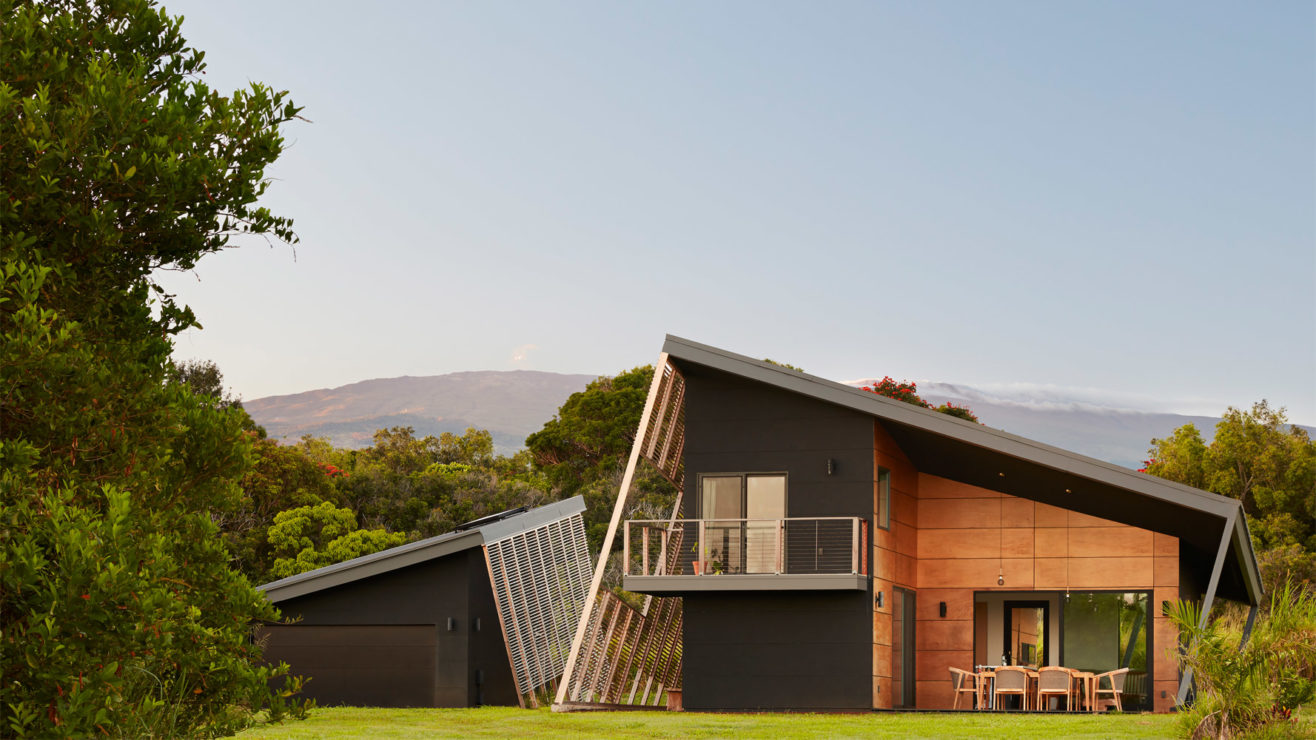
Agosto House, San Juan Island,
Washington
Patkau Architects, Inc.
This private residence was built for a couple relocating from
Manhattan to a small rural island off the Pacific coast. The
house, which includes living space, an office, and a garden,
is clad in light-gauge galvanized sheet steel to protect it
from weather extremes and wildfire.
Conservatory of Flowers, San Francisco,
California
Architectural Resource Group
Originally completed in 1878 and damaged during a 1995 storm,
repair and preservation of the graceful glass and steel structure
allows new interpretive exhibits and enhanced visitor accomodations.
Contemporaine at 516 North Wells,
Chicago, Illinois
Perkins + Will
The 28-unit condominium building contains a 4-story base for
retail and parking and an 11-story residential tower. Located
in Chicagos River North area, it successfully mediates
the varying scale and context with its sculptural tower.
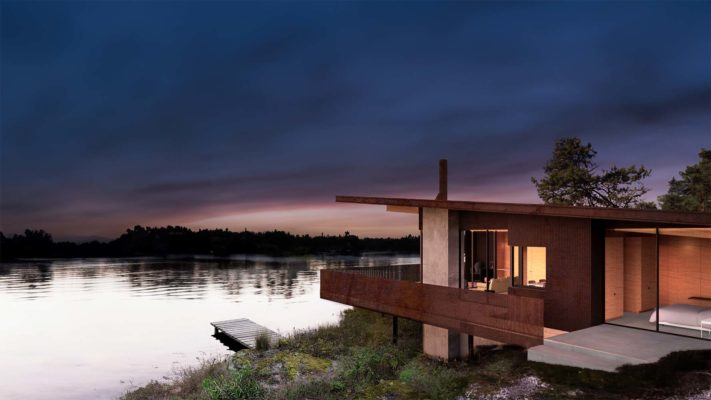
Emerson Sauna, Duluth, Minnesota
Salmela Architect
On Finnish immigrants pioneer farmsteads, the sauna
was often the first building erected. The intent of the clients,
reared in Northern Minnesotas Scandinavian culture,
was to revive the social aspect of the sauna. The brick interior
provides ample radiant heat and the cooling porch allows breezes
off the lake to pas through while providing privacy.
Gannett/ USA Today Headquarters,
Mclean, Virginia
Khon Pederson Fox Associates PC
To consolidate facilities and promote communal interaction
between USA Today and parent company Gannett, the company
relocated to a suburban Washington, D.C. location. The project
consists of two linear buildings on a common base, with each
structure spiraling up to enclose an exterior "town square."
University of Michigan Hill Auditorium,
Ann Arbor, Michigan
Quinn Evans Architects
Architect of Record Alberg Kahn + Associates, Inc.
Designed by Albert Kahn and completed in 1913, Hill Auditorium
is a masterpiece of Classic Revival architecture. To transform
this historic gem into a modern performance venue yet retain
its original character, the team restored historic figures,
increased patron comfort and accessibility, performed building
code compliance upgrades, and replaced and modernized the
buildings mechanical and electrical systems.
Holy Rosary Catholic Church Complex,
St. Amant, Louisiana
Trahan Architects APAC
The master plan of this rural campus creates a strong sense
of place for all functions of the parish, drawing a distinction
between the programs sacred and secular components.
Secular components of the campus take form as edge buildings
framing a courtyard where the oratory is located. Position,
formal purity, and height reflect the importance of the spiritual
program and serve to distinguish the chapel from its surroundings.
Jubilee Church, Rome, Italy
Richard Meier & Partners Architects, LLP
This church was conceived as a new center for an isolated
housing quarter outside central Rome. The paved sagrato to
the east of the church extends into the heart of the housing
complex and provides a plaza for public assembly. The three
concrete shells that, with the spine-wall, make the body of
the nave, imply the Holy Trinity and the pool reflects the
role of water in Baptism.
Mill City Museum, Minneapolis,
Minnesota
Meyer, Scherer & Rockcastle, Ltd.
Declared a National Historic Landmark in the 1980s yet vacant
since 1965, the building was gutted by fire in 1991 leaving
an eight-story high, block-long shell filled with debris.
Located within the burned-out walls of the mill complex, the
Mill City Museum focuses on the stories of grain farming and
trading, water power, the mill building, flour milling, and
railroading.
Mountain Tree House, Dillard,
Georgia
Mack Scogin Merrill Elam Architects
The arrival of grandchildren prompted the owners to convert
their North Georgia garage/potting shed into a combination
playroom, guest room, bamboo deck, and garage. The bedroom
above is cantilevered over the work-yard, open and airy in
contrast to the concrete garage below. The bathroom is clad
in steel, with walls that swing wide open for outdoor showers
and spring cleaning.
Seattle Central Library, Seattle,
Washington
OMA/LMNA Joint Venture
Seattle Central Library is organized into spatial compartments
that are dedicated to and equipped for specific duties. The
librarys unique "book spiral" addresses the
ongoing problem of subject classification. Instead of using
the Dewey Decimal System, the architects arranged the collection
in a continuous ribbonrunning from "000" to
"999"the subjects form a coexistence that
approaches the organic.
Shaw House, Vancouver, Canada
Patkau Architects, Inc.
Overlooking English Bay, this private residence is organized
simply, with living spaces on grade, private spaces above
grade, and a music room below grade. Small spaces are enlarged
by generous ceiling heights, while the location of the lap
pool brings both daylight and reflected light deep into the
central areas.
Somis Hay Barn, Somis, California
SPF:a,
Guided by the dual/dueling philosophies of Modernism and wabi-sabi,
the architect created this hay barn and stable. The barn itself
is a 12-foot x12-foot structural steel gridsolid, permanent,
modern, sleek, and unchanging. Hay is used as cladding to
break the wind and insulate. The stable is earthy and constantly
changing: hay changes odor, bales are used for bedding and
feed, with horses sometimes eating hay right off the building.
INTERIORS
Ackerman International, London,
England
Elliott + Associates Architects
On the clients request, the architects worked to capture
London as a place for this 1,800-square-foot advertising agency
office. They focused on creating a space that is simultaneously
very traditional and very Modern. The space was designed to
be changeable, mobile, and transparent, allowing lots of light
to pass through.
Boys Club of Sioux City, Sioux
City, Iowa
Randy Brown Architects
Originally built as an armory in the early 1900s, this building
became home to the Boys Club in the 1950s. While the location
and size of rooms were predetermined, the architects were
able to transform the spaces by the intervention of new architectural
objects. Storage rooms were cleaned out and transformed into
a custom treehouse/play structure while other found space
became the Teen Room.
Chanel, Paris, France
Peter Marino + Assoc. Architects with associate architect
Vigneron Architects
The Chanel boutique on Rue Cambon in Paris is an expansion
and redesign of Mademoiselle Coco Chanels original boutique
beneath her legendary studio and apartment in Paris. Upon
entering the store, one is immediately introduced to the strong
graphic statement of the iconic Chanel tweed in the form of
a hand-hammered, gold-leaf glass wall.
East End Temple, New York, New
York
BKSK Architects LLP
The new home of this temple formerly served as a residence
built in 1883 by Richard Morris Hunt. Its façade and
the front library room, all that remained reasonably intact,
have been restored to their former elegance and adapted to
the temples needs. The sanctuary was designed to embody
many of the symbols of Jewish faith.
Elie Tahari Fashion Design Office
& Warehouse, Millburn, New Jersey
Voorsanger Architects PC
The architects created the Elie Tahari Fashion Design Offices
and warehouse complex from a renovated storage facility in
suburban New Jersey. They brought light and landscape inside
to the working staff by cutting into the roof structure to
create two courtyards. The structural system was reinforced
and the interior perimeter fitted with glass paneling, leaving
the new spaces open to the sky and letting in natural light.
Hyde Park Bank Building Hall,
Chicago
Florian Architects PC
The historic Hyde Park Bank occupies the second floor of this
Chicago neighborhoods principal office building. The
program called for restoring the grandeur of an historic banking
hall while conveying a sense of security, continuity, and
the banks importance to the community. The architects
redesigned the structural supports for metal mesh screens,
glass walls, and teller canopy, refining them to minimal sizes.
McMaster University James Stewart
Center for Mathematics, Hamilton, Ontario
Kuwabara Payne McKenna Blumberg Architects
This project is an adaptive reuse of 1929 Hamilton Hall, one
of the oldest buildings on the McMaster University campus.
The architects objective was to create a facility that
recognizes the interactive nature of mathematics with spaces
that promote team-based study and research. They chose a highly
abstract and Modern interior in stark opposition to the historic
Collegiate Gothic exterior.
Jigsaw, Los Angeles, California
Pugh + Scarpa Architects
For this film-editing facility, the architects transformed
the interior of a rough 1940s bow-truss warehouse into an
entirely surprising and inventive space. In the center of
the space are two curvaceous volumes suspended over a shallow
pool of water. This same relationship between object and space
can be seen at a larger scale throughout the project, where
the spaces among the objects and volumes in the warehouse
become niches for informal encounters.
l.a. Eyeworks Showroom, Los Angeles,
California
Neil M. Denari Architects
In working with the basic parameters of store design--such
as the demand for transparency from the street and from the
sales counter--the design shapes space and movement through
a continuous suspended surface. The notable blue surfaces
throughout perform many functions: perforated ceiling plane,
window display, bench, shelving unit, and sales counter.
Paul & Lulu Hilliard University
Art Museum, Lafayette, Louisiana
Eskew + Dumez + Ripple for the University of Louisiana at
Lafayette
Situated adjacent to the original 1967 University Art Museum,
this new museum serves as a backdrop to the original. The
33,000-square-foot program includes lobby and public spaces,
permanent collection and changing exhibit galleries, museum
offices, archival storage, and art support spaces.
Pavilion in the Sky, London
Peter Marino + Assoc. Architects
Designed for a Modern art collector, this 4,800-square-foot
residence occupies the top floor of a building along the River
Thames. A shimmering cube of onyx surrounds the buildings
core. From the center of the onyx core, a stone entry hall
leads through Lalique crystal paneled doors and emerges to
a landscape of sculptured forms that define the more private
zones of the residence.
REGIONAL AND URBAN DESIGN
Anacostia Waterfront Initiative
Framework Plan, Washington, D.C.
Chan Krieger & Associates, Inc., with Beyer Blinder Belle;
Ehrenkrantz, Eckstut and Kuhn Architects; Simon Martin-Vegue
Winkelstein & Morris; Greenberg Consultants Ltd.; and
Landscape Architect Wallace, Roberts & Todd
The ambitious goals of the Anacostia Waterfront Initiative
are to heal and rejuvenate the river, promoting sustainable
development within the watershed; open waterfront access and
improve infrastructure; construct a riverwalk to connect waterfront
parks; create a cultural bridge connecting Anacostia to D.C.s
historic treasures; and enhance the tax base by building more
than 20,000 new units of housing within walking distance of
the river.
Battery Park City Streetscapes,
New York, New York
Rogers Marvel Architects PLLC
Begun in 2002, this project improves the streetscape, connections,
and perimeter security of the World Financial Center. Realizing
that additional security measures would dramatically alter
traffic patterns and pedestrian and public spaces, the design
team worked with the U.S. Army Corps of Engineers to study
and test vehicle immobilization techniques.
Cadys Alley, Washington,
D.C.
Sorg & Associates PC, with Frank Schlesinger Associates
Architects; McInturff Architects; Martinez & Johnson Architecture
PC; Shalom Baranes Associates Architects; and Landscape Architect
The Fitch Studio
Located next to the historic C &O Canal in Georgetown,
this formerly rundown collection of 19th- and early-20th-century
warehouses, workshops, stables, and small commercial row structures
languished as the communitys other corridors thrived.
Purchased by the owner-developer with the intent of creating
an urban design center that would be an alternative to suburban
big-box retail outlets, the revitalized thoroughfare contains
121,000 square feet of retail (mainly home furnishings), office
space, and six apartment units.
City of Santa Cruz Accessory Dwelling
Unit Program, Santa Cruz, California
RACESTUDIOS, with Mark Primack Architect; David Baker Partners
Architects; CCS Architecture; SixEight Design; Boone/Low Architects
and Planners; Peterson Architects; and Eve Reynolds Architects
With little remaining land for development and enormous growth
pressures, Santa Cruz has turned to its primary asset for
helpsingle-family neighborhoods. To maintain the character
of its neighborhoods, the city introduced an innovative development
program for Accessory Dwelling Units (ADU). To encourage homeowners
to develop ADUs, the city has relaxed zoning restrictions;
introduced a development fee waiver and loan program; and
offers community education workshops and a "how-to"
guide.
Chongming Island Master Plan,
Shanghai, China
Skidmore, Owings & Merrill LLP, with associate architect
W. Cecil Steward, FAIA
One of the largest alluvial islands in the world, Chongming
Island is the least developed of Shanghais five administrative
districts. To plan for long-term development and create a
showcase environmental community, this master plan uses six
sustainable concepts: maintaining wilderness and ecosystems,
transitioning to organic farming, incorporating green systems,
improving eco-transportation, building green villages, and
developing sustainable coastal cities.
Jackson Meadow, Marine on St.
Croix, St. Croix, Minn.
Salmela Architect & Coen + Partners
Located within the oldest settlement in Minnesota, this new
residential development is adjacent to 191 acres of permanently
protected open land. Sited on 145 acres of meadows and wooded
hills overlooking the St. Croix River, the architecture responds
to the towns cultural history by interpreting vernacular
form, materials, detailing, and spatial organization.
North Allston Strategic Framework
for Planning, Boston
Goody, Clancy & Associates
This Harvard University expansion plan embodies community-building
principles to guide growth in the North Allston neighborhood
and ensures that the collective will, interests, and goals
of all major stakeholders are reflected. By emphasizing walkability,
livability, and permeability the framework enriches the traditional
character of the community while providing new opportunities
for economic growth.
Northeastern University West Campus
Master Plan, Boston
William Rawn Associates, Architects, Inc.
The paramount goal of this master plan is to achieve the ideal
balance between open public access, civic presence, and a
threshold for learning. Guiding Northeastern University over
a 10-year period, the plan provides for development of a new
West Campus that ties together existing elements and adds
more than 1,200,000 square feet in campus buildings
Ramsey Town Center, Ramsey, Minn.
Elness Swenson Graham Architects Inc., with Close Landscape
Architects
A genuine downtown with a mix of goods and services that meet
residents needs, Ramsey Town Center will provide a strong
job and tax base and maintain the character of this community
of 20,000. This master plan creates a unique heart to the
community and will add over 2,500 units of mid-density housing,
600,000 square feet of retail, 460,000 square feet of office
space, a medical center, civic buildings, and a K-12 charter
school.
Riparian Meadows, Mounds &
Rooms: Urban Greenway, Warren, Ark.
University of Arkansas Community Design Center, for Warren
Townscape Committee
This plan proposes a public greenway along a creek in the
City of Warren that combines innovations in stream design
with community development. Stream restoration will provide
corrective measures to address existing infrastructural problems.
Corrective measures are supplemented with a vegetated riparian
edge, return of stream sinuosity, and strategic bank armoring
to prevent excessive erosion and sediment transport.
West Harlem Waterfront Park, New
York City
W Architecture & Landscape Architecture LLC
Created by a neighborhood coalition of 40 groups, this master
plan will make Harlems waterfront a destination by creating
a park with piers that extend into the Hudson River. At present,
the substantial workforce commutes outside the community;
this plan will promote area revitalization and diversification,
community involvement, job opportunities, and local entrepreneurship.
|