









|
By Sara Hart
The problem
The thin marble veneers that cover the
entire structure were the problem. Microscopically, certain
marbles are composed of a series of tightly interlocked, crystalline
calcite grains that are adhered together with a calcite binder.
Changes in temperature reek havoc on this type of structure
by causing intergranular fractures, or microcracking, in the
calcite binder. The grains within the binder disassociate,
meaning they come apart. This constitutes a permanent change
in the material properties of the marble, which causes a volumetric
expansion. And the march toward deterioration begins. This
condition is known as hysteresis, and its as bad as
it sounds.

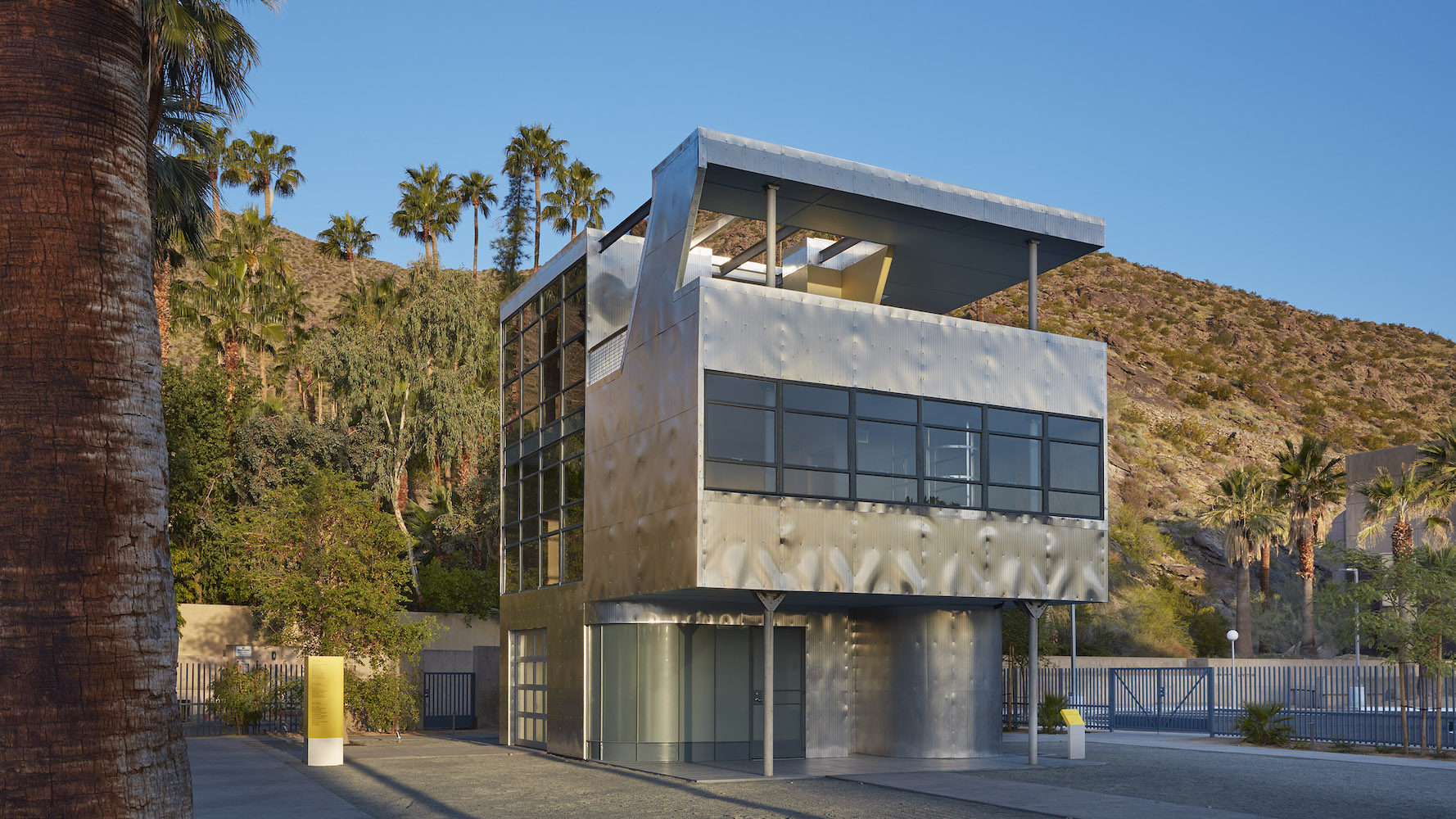
The new aluminum-clad
observation deck (above) replaces the prior
one (below). |
|
|
Hysteresis is especially threatening
to thin marble veneers, a popular cladding material in the
1970s. Not only are the panels of Georgia white marble on
the city hall thin, they have a coarse grain, which makes
them more prone to hysteresis than fine-grain marbles, such
as Vermont marble.
In hysteresis, individual panels will
deteriorate at different rates, depending on the extent of
exposure to temperature changes. Obviously, the exterior faces,
which are exposed to sunlight and weathering, will experience
hysteresis more than the protected, interior areas. Because
the exterior surfaces therefore deteriorate faster, the panels
will cup and bow outward. Severe weathering will cause visible
cracking at the panel edges. As the bowing gets worse, moisture
penetration increases, and the cracks in the exposed panel
surfaces open up more.
In cities, acid rain can accelerate the
dissolving of the calcite binder, which increases the rate
of disaggregation of the stone. Disaggregation is also known
as sugaring, due to the loose, powdery calcite
grains that appear on the exposed surfaces when this happens.
This leads to more edge-cracking and distress within the panels,
which, in turn, leads to significant strength loss in the
stone.

The original window
frame enclosed only three quarters of the
opening and was topped off with a suicide
hookbent stainless-steel square
rods with a sharpened point. The new windows
are thoroughly glazed. Panels are hung from
vertical aluminum-rail brackets anchored to
the concrete column (below). |
 |
|
|
For the past 30 or 40 years, hysteresis
has been acknowledged as a serious condition affecting marble,
but its effect on thin stone veneers was not widely known
at the time Richmond City Hall was designed and built. Today,
it is generally accepted that hysteresis is what might be
called a terminal disease for thin marble veneers, since it
can neither be reversed nor cured. Once the disease has reduced
the flexible strength of a marble panel to between 400 and
600 psi (1,000 psi is the current minimum industry standard),
the structural integrity of the stone has probably been forever
lost, and in situ repair or stabilization is no longer a viable
option. Eventually, the panel will become so fragile that
it will become dangerous to leave it on the building. This
was the case with Richmond City Hall, as the SMBW and WJE
study reported.
|