|
By Nancy B. Solomon, AIA
Common concerns
Ochsendorf points out that both preservation
and sustainable design share some similar challenges, as well.
In regard to materials, for example, all standards address
new materials. To reuse a building component, such as a salvaged
beam or old flooring, an engineer must undertake a custom
calculation. This is an added burden for historic renovations
and sustainable design alike. Even worse, existing structures
are sometimes torn down simply because standards dont
exist and the average engineer doesnt know how to calculate
the bearing capacity for the older structure. According to
Ochsendorf, this was the fate of some Guastavano tile vaultings,
despite the fact that they had plenty of extra capacity. This
is a catastrophe from the viewpoint of both the preservationists
and the environmentalists, says Ochsendorf. He cites
a group in Cambridge, England, called the Bridge Research
Center that is working on educating engineers on new methods
of structural assessment designed to evaluate older structures.
Inherent conflicts
Despite the many shared values and concerns
between preservation and sustainable design, occasionally
conflicts do arise and trade-offs have to be made. Energy
efficiency is probably the most problematic area, with windows
generating the most controversy.
 |
|
|
|
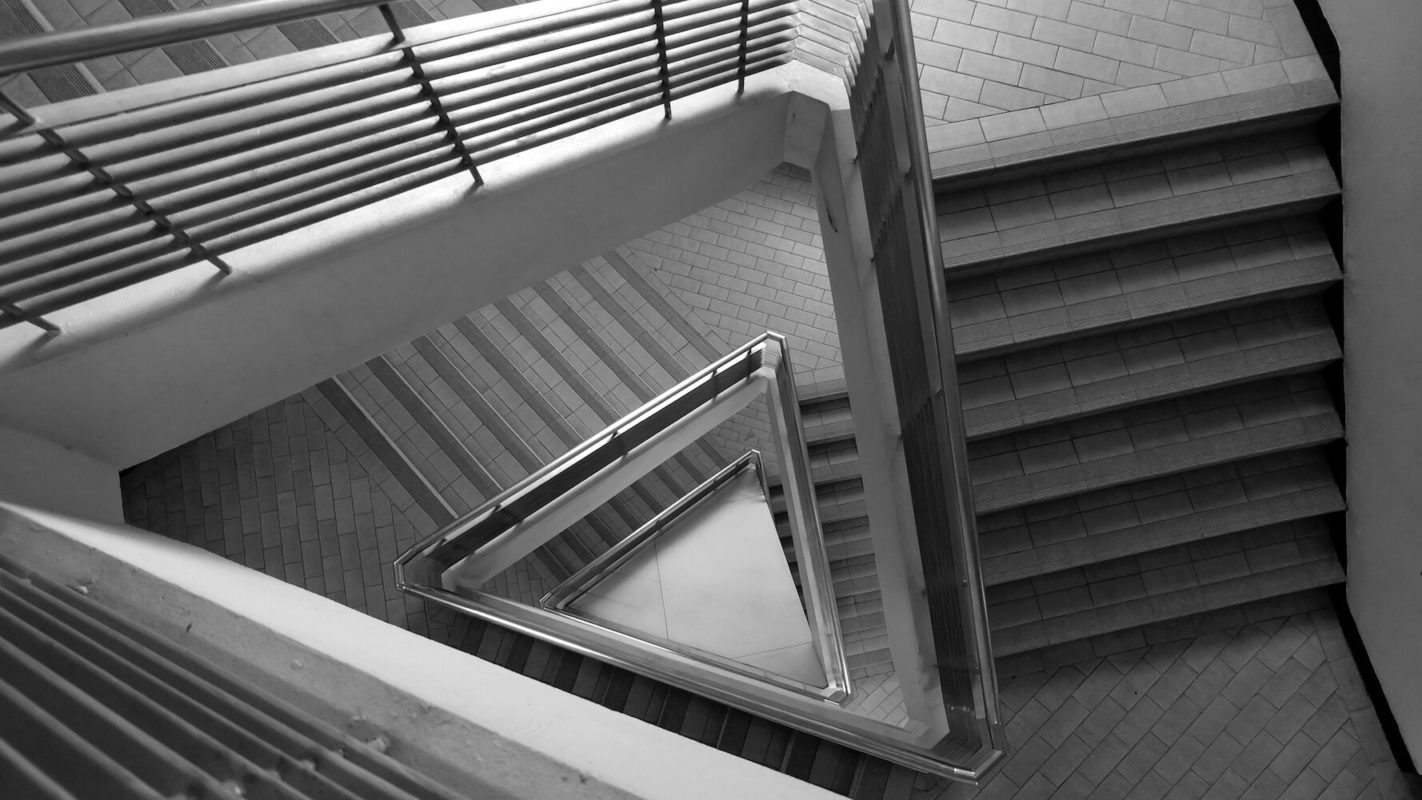
In a recent renovation of
the S.T. Dana Building at the University of Michigan,
built in 1903, a fourth floor was inserted on
top, beyond the sight lines (below). The railing
in the new atrium was made from recycled glass
(top).
Photography: © Christopher
Campbell
|
|

Photography: Courtesy
the architect |
|
 |
Another pet peeve of preservationists
is the practice, required in some jurisdictions, of insulating
the interior of thick masonry walls and installing a vapor
retarder. In cold climates, this technique can reduce heat
loss but can also reduce the ability of the wall to dry out
when wet, thereby creating freeze/thaw cycles within the wall
that can cause deterioration in the load-bearing masonry,
explains engineer Matthew Bronski of Simpson Gumpertz &
Heger in Waltham, Massachusetts.
Lighting requirements and preference
can also generate conflicts. In the Metzenbaum project, for
example, the architects chose to retain the original incandescent
luminaires in the courtrooms and judges chambers and
provide higher light levels by specifying additional, replicated
incandescent fixtures to maintain the historic character of
these ceremonial spaces. Says Paul Westlake, Jr., FAIA, managing
principal of vDWRL, We had to clear it with GSA, because
we do have some clients who say they will not have any incandescent.
|