|
By Gregory Beck, AIA
Many of us have come to realize,
sometimes begrudgingly, that the quirky, irreverent landscape
of Las Vegas can be a spectacular laboratory of design ideas.
Behind the fantasy, however, the architecture of Las Vegas
is a blood sport. Environments here must produce results at
an unforgiving pace, then change, and change againor
be imploded for the next new thing. Here buildings may be
signs, or may not need signs, but most importantly, they are
understood to be temporary expressions of a temporal society.
Its a town built by pop-culture Medicis, writing checks
to fuel adventures in environments. Where else could the Rat
Pack, Rem Koolhaas, and a Sphinx coexist?
 |
|
|
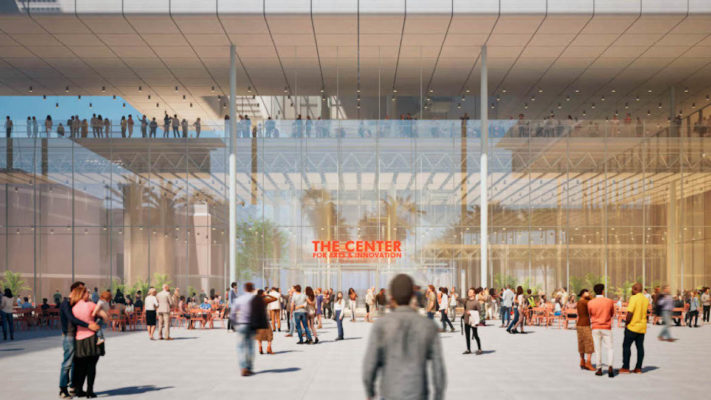
| The Cloud defines a new entryway
for the Fashion Show (below), articulating the outdoor
plaza area while also shielding pedestrians from
the merciless desert sun (above). |
|
|
|
 |
But this oasis of iconography has
yet to show us its version of a civic place, a setting where
its residents and 36 million annual visitors might choose
to congregate. What could happen if we mixed architecture
and new media technologies with this spirit of consumption,
and rolled the dice down Las Vegas Boulevard?
In the city with a tradition of
recasting itself for each new generation, the newest game
in town may be the third-oldest profession: shopping. Las
Vegas is home to one of the most profitable retail environments
in the world, the oft-imitated Forum Shops at Caesars
Palace. So when developer The Rouse Company acquired the aging
Fashion Show Mall on the Strip in 1997, its charge was nothing
less than to define a first-of-its-kind public space, crafted
around new media concepts in a city that literally breathes
the new.
|