![]() |
Lukas Petrash’s MCD House:
Trash becomes a family’s treasure
|
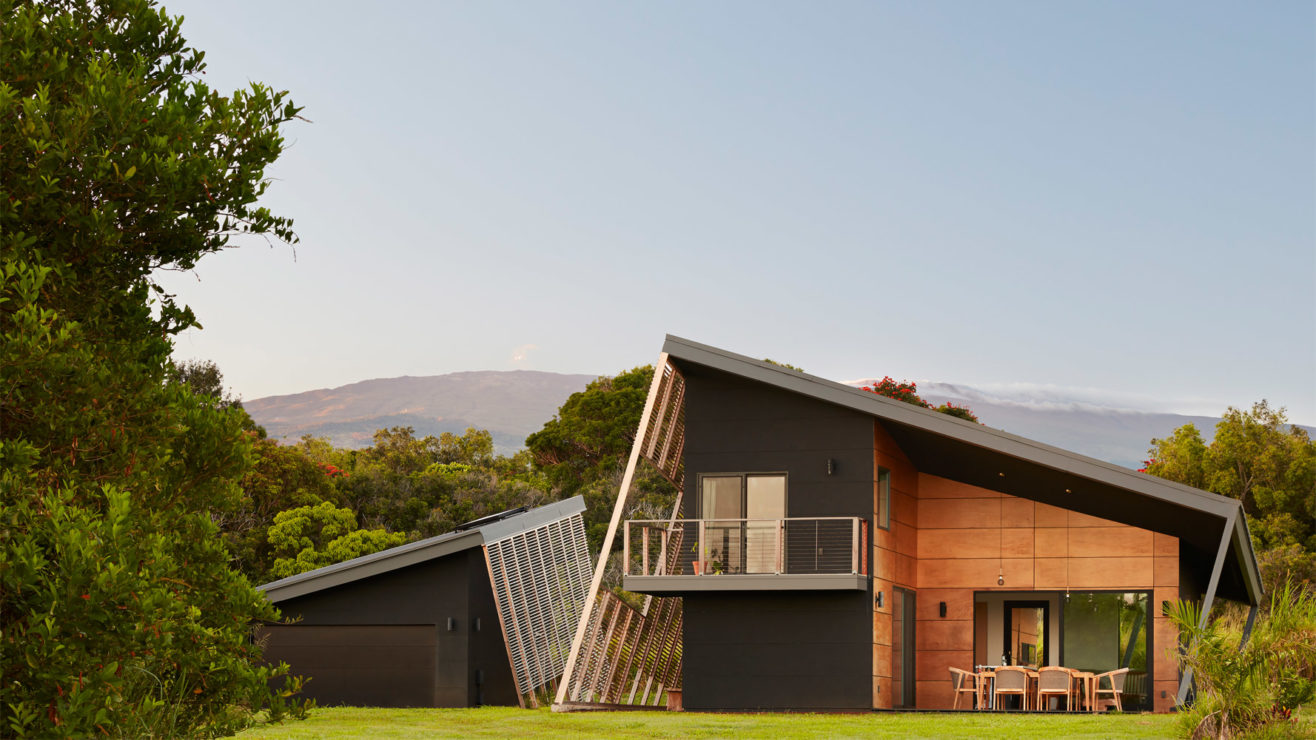
To describe the house Lukas Petrash designed and built for his aunt Mary Coronis-Dros and her two children in Huntsville, Texas, requires a certain breathless tone. MCD House cost only $24,500 to build, with $10,000 of that forgiven as a federal homesteading grant. It measures only 484 square feet. And Petrash was only 23 years old when he finished it. The project began when local artist and president of the Sustainable Builder’s Guild in Huntsville Dan Philips issued Petrash, then approaching his fifth year at the University of Southern California, a challenge: If Petrash would build a sustainable home only as big as the legal minimum size, Philips would give the student access to his cache of scraps. Calling MCD House the “culmination of a lifetime of making things out of nothing, and of wanting to design very nice houses at low cost,” Petrash, now 26, signed on.
Based on what you have seen and read about this project, how would you grade it? Use the stars below to indicate your assessment, five stars being the highest rating.
Accepting Philips’s terms meant seeking his approval on design decisions. It also meant hitting the jackpot. “The scrap was basically leftovers from Houston homes—very expensive scrap, but scrap nonetheless,” he says. Petrash estimates that purchasing these materials could have added roughly $40,000 to the price. Yet he also concedes, “Building a house out of scrap is extremely labor-intensive, and you have to know how to, say, splice beams so they stand at the height you want.” As well as splicing, Petrash also applied his expertise to the overall engineering. To provide Coronis-Dros with more usable space without crossing the 484-square-foot threshold, Petrash attenuated the volume to make room for a loft, and transformed the elevations into a zigzag of bay window–style projections that contain everything from bookshelves to a bathroom sink. He also rethought the domestic lifestyle, relegating the less intensely used dining room to the house’s semi-enclosed southeast corner, and, in the opposite corner, placing the heat-producing refrigerator in a similarly exposed stairwell made of pallets. Additional outdoor decking hugs a 65-foot-tall sweet gumball tree that shades the house; water from that bathroom sink runs through filtration pipes to a planter; the translucent marble that shields the bathroom from neighbors is actually a trombe wall; ventilation points all around the house sustain stacking and Venturi effects. With occasional use of a space heater or a bedroom-window air conditioner, Coronis-Dros says her monthly electricity bills top out at $75 and $45, respectively. And Petrash? He just graduated from Harvard’s GSD with a Master in Design Studies, he’s involved in several Italian projects including developing a small eco-friendly village for a charitable organization near Milan, working on a book, starting his own architectural firm (called Adia), etc. His aunt’s home may be his smallest project, but to her family, it’s his best and brightest.
Get Architectural Record digital with free bonus content not found in the magazine!
Order back issues—complete your library!