home
subscribe
free e-newsletter free e-newsletter
reader service
widget
advertise
Subscribe to Architectural Record today
and save 60% off the newsstand price.
comment

Students from Studio ST  
URBANbuild students bring hope to New Orleans

By Ingrid Spencer

Even before Hurricane Katrina decimated New Orleans, housing in the city was a problem. Tulane University’s School of Architecture, under an umbrella program of the school called Tulane City Center, had been working to help since the summer of 2005, with a design-build studio called URBANbuild. “Thirty-three percent of people in Orleans Parrish were living below the poverty line before Katrina,” says Byron Mouton, codirector of URBANbuild. “Our program was designed with a ‘macro scale,’ which concentrates on research at the regional/city/neighborhood scale, and a design-build ‘micro scale,’ concentrating on research at the neighborhood/dwelling/material scale.” According to Mouton, since the hurricane, these and other outreach programs under Tulane City Center’s auspices have gained strength, as justification of their necessity has been established and funds have become available.

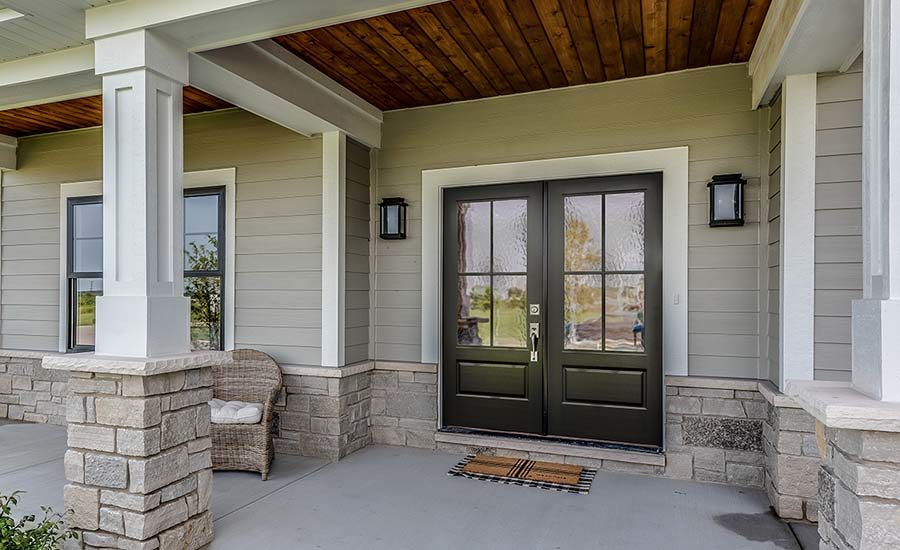
Prototype 02—a variation on the typical New Orleans camelback home
Photo Courtesy of URBANbuild


The Prototype 2 house was designed and BUILT by students from the URBANbuild design-build studio

Rate this project:
Based on what you have seen and read about this project, how would you grade it? Use the stars below to indicate your assessment, five stars being the highest rating.
----- Advertising -----

Thanks to that urgency, the partnership with community nonprofit agencies that specialize in affordable housing and neighborhood redevelopment, and the hard work of faculty and 12 undergraduate students, URBANbuild has completed its second design-build project, Prototype 02—a variation on the typical New Orleans camelback home, and an experiment in new building technologies. Located in a blighted area called Central City, the 1,320-square-foot house was built with panelized steel-stud walls.

“This is the second prototype house we’ve completed in this studio,” says URBANbuild project manager Emilie Taylor. “The first one was a more cautious effort done with traditional stick framing, but because the panelized walls for 02 were made in a warehouse, we could save time during the construction process.”

And because the two-semester time frame of the class meant one semester for design and one for building, more time was essential. Except for the licensed trades, the students do all the work. “Starting in January, we were putting in well over 40-hour weeks to stay on our 15-week schedule,” says student Matthew Shaver. “We want to disperse the product,” says Mouton. “Our goal is to replace homes to repair neighborhoods.” While the URBANbuild studio continues to modify its design to reach the best solution for mass production, a separate studio at Tulane led by local architect Coleman Coker, called Greenbuild, and producing a modular home, will also be completed this year. With that house the third in the series, the Tulane City Center program is well on its way to helping provide alternative housing solutions to the city at an affordable cost. Until the program gets the plans for the URBANbuild homes mass-produced, neighborhood housing agencies are finding buyers for the prototypes. The first has been sold for $120,000 (had the buyer qualified for low-income status, he would have been able to purchase the property for less), and the second is currently available for purchase.

With all the success of the program, Mouton admits it’s still a struggle. “We’re often trying to build in parts of the city that should become greenspace,” he says. “But the people from these areas are proud, and they’re not about to give up the neighborhoods they’ve lived in for years. It’s a larger urban issue that we’re very much involved in.” 

 Reader Comments:

Sign in to Comment

To write a comment about this story, please sign in. If this is your first time commenting on this site, you will be required to fill out a brief registration form. Your public username will be the beginning of the email address that you enter into the form (everything before the @ symbol). Other than that, none of the information that you enter will be publically displayed.

We welcome comments from all points of view. Off-topic or abusive comments, however, will be removed at the editors’ discretion.

----- Advertising -----
Read dispatches from an Architecture for Humanity Fellow working in South Africa
View all blog posts
Recently Posted Reader Photos
View all photo galleries
Recently Updated Reader Profiles