|
It is easy to typecast Chicago as the Midwestern
City of Big Shoulders that had (past tense) a major influence on
the planning of the modern metropolis and the development of tall
buildings. In the architecture profession, Chicago is known for
large, prominent firms with storied histories, including Skidmore,
Owings & Merrill and Holabird & Root, which helped to shape
it. But who are emerging as the new architectural talents for an
evolving Chicago? RECORD found a handful of extraordinary young
Chicago designers who are forging ahead in directions that a young
architect may not have thought possible even a generation ago.
 |
|

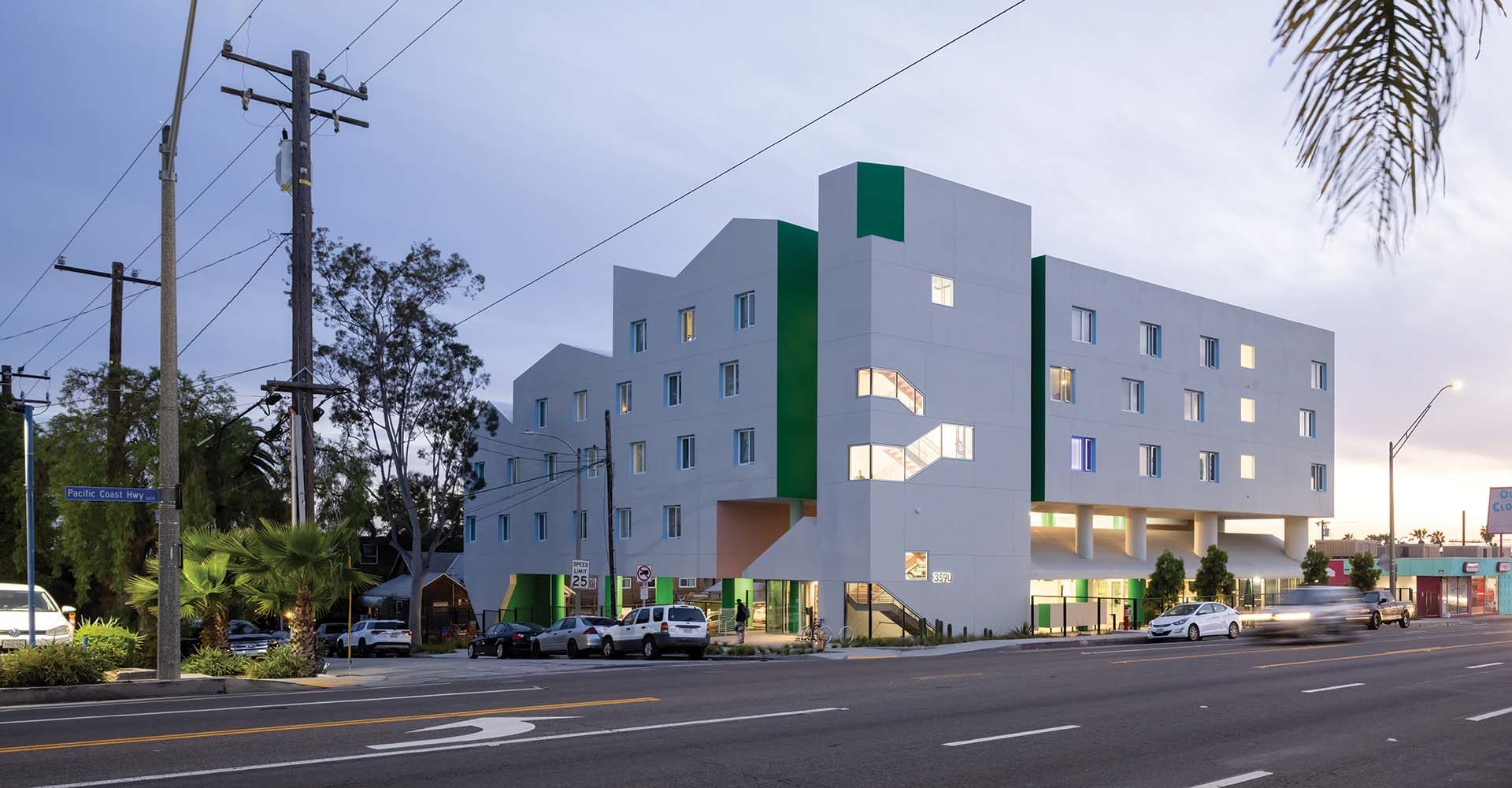
Image courtesy 3D Design
Darryl
Crosby and Melinda Palmore
of 3D Design Studio
| Projects
include the uniquely configured and variously
clad Intergenerational Learning Center in
Chicago (above) and a winning prototype for
the Universal and Affordable House Competition. |
|
 |
|
|
|

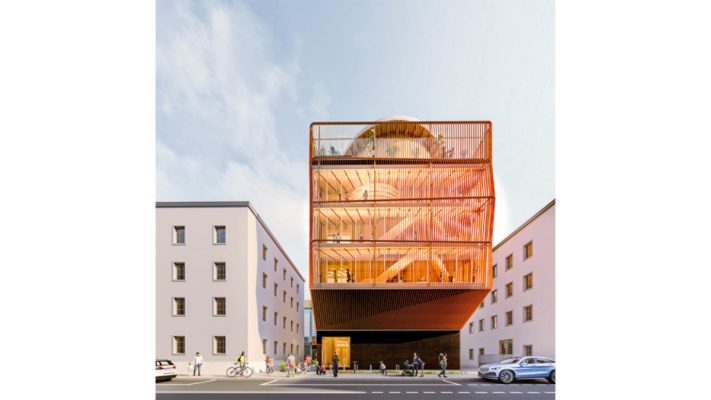
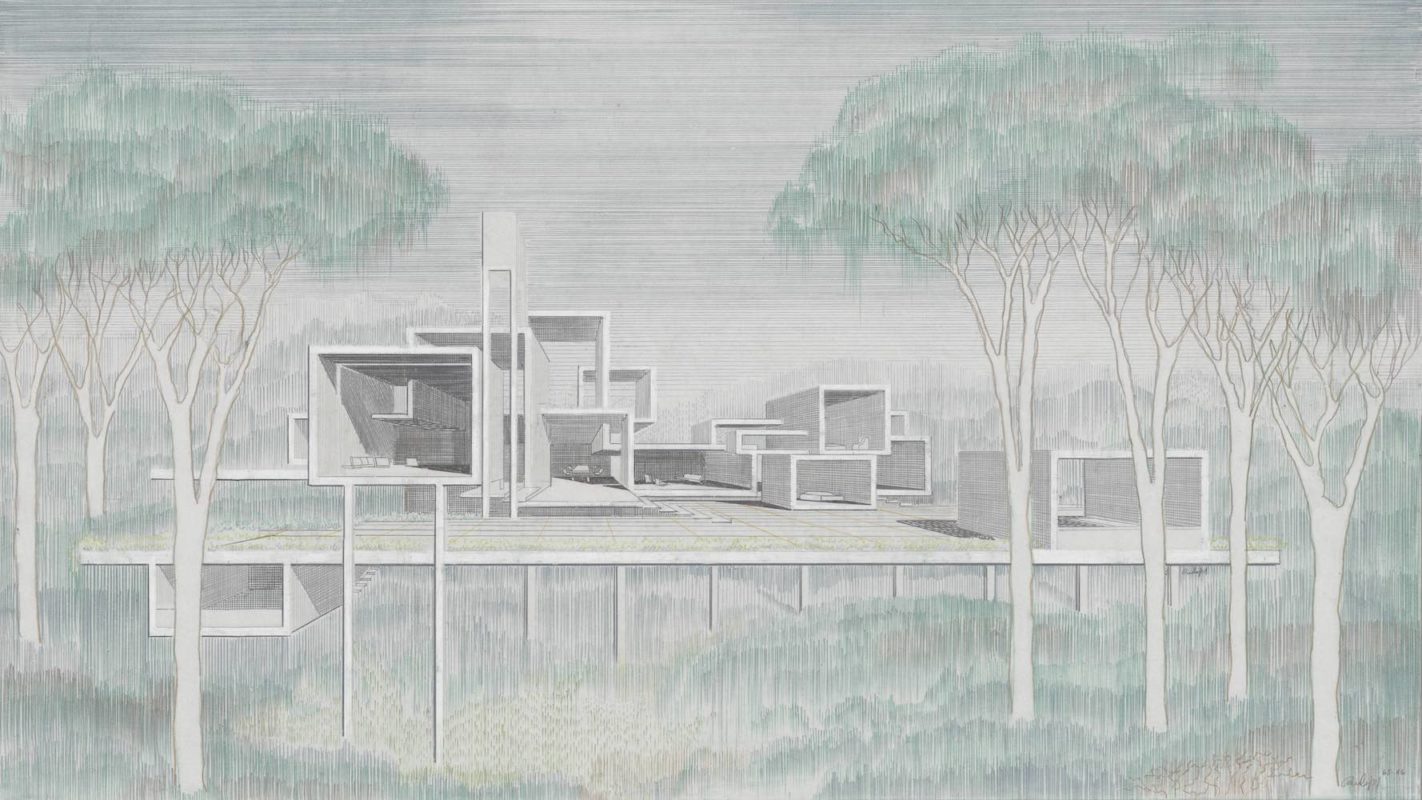
Image courtesy UrbanLab
Martin
Felsen and Sarah Dunn of UrbanLab
|
Projects include their own studio/live space,
which cantilevers over the demolition debris
of a former grocery store, and an ecofriendly,
highly unorthodox entry for the Ford Calumet
Environmental Center (above). |
|
 |
|
|
|

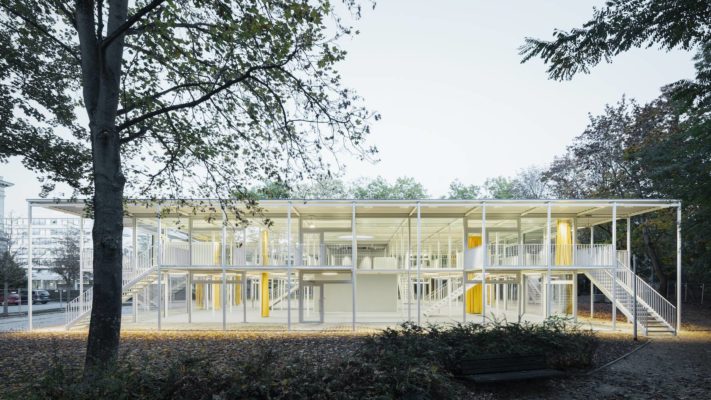
Image courtesy Strawn and Sierralta
Brian
Strawn and Karla Sierralta
|
Their entry for the Ford Calumet environmental
Center includes recycled car hoods and reclaimed
telephone poles. Their Dual Memory (above),
which featured victims’ faces projected on
clear surfaces, was a finalist at the World
Trade Center Memorial Competition. |
|
 |
|
|
|

Image courtesy Deutschwrx
Randall
Deutsch - Deutschwrx
|
Randall Deutsch proposed a Pedway entry pavilion
for Brunswick Plaza in Chicago (above) that
features curved glass and steel with a stone
base. The steel has an anodized aluminum finish
to match surrounding buildings. |
|
 |
|
|
|

Image courtesy EL: Environmental Language
Jill
Salisbury - EL: Environmental Language
|
Jill Salisbury founded a company, EL: Environmental
Language, that has developed biodegradable
home furnishings (above) made of natural and
nontoxic materials. |
|
 |
|
|
|
Starting a new architectural practice in Chicago
can be daunting, considering the architectural history of the city
and the pedigree of some of its most well-established firms. But
for Darryl Crosby and Melinda PalmoreChicago natives and friends
since meeting in architecture school in the mid-1980sstarting
their own firm as African-Americans in a predominantly white profession
was an even greater challenge. They began 3D Design Studio in 1997
and now have two employees, a few competition wins, and a growing
list of high-profile clients. Its difficult to move
up in the structure if youre not white, Palmore says.
But we had the requisite talent and courage to start our own
firm.
Palmore and Crosby met at the University of
Illinois at Chicago (UIC) School of Architecture, and both gained
valuable experience in the Chicago office of Skidmore, Owings &
Merrill, where Palmore worked on the design for Londons Canary
Wharf. Crosby got his start working for his professor, Stanley Tigerman,
FAIA, at Tigerman McCurry Architects while still in school. Darryls
work is clear, clean, direct, and still innovative, says Tigerman.
Crosby and Palmore began their own firm with
a commission for administrative office renovations and a new outdoor
terrace for Chicagos Field Museum of Natural History. A number
of competition entries also fueled their creative spark before the
firm won the Universal and Affordable House Competition, sponsored
by the City of Chicago in 2002, for universally accessible and adaptable
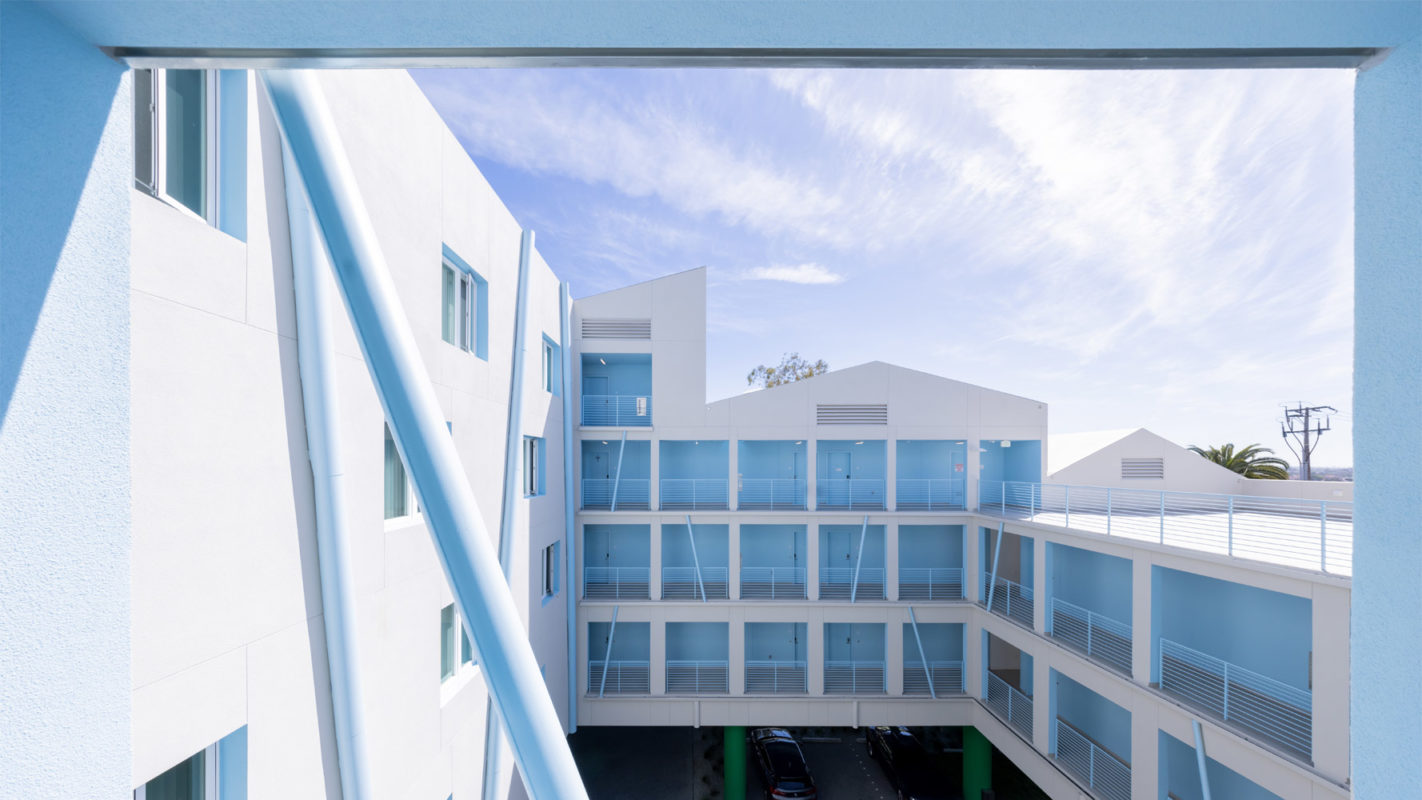
housing. Their design for three prototypesall based on 12-by-36-foot
modulesclearly distinguish living, circulation, and service
spaces both in plan and through distinctive colors on both the interior
and exterior. Now the team is designing
a new lounge that will open this summer in the renovated Goodman
Theater, and the $9 million Intergenerational Learning Center in
Chicago, a colorful space clad in metal panels, plywood, aluminum,
and spandrel glass, providing housing, education, and day care for
children and seniors alike.
Neither Sarah Dunn nor Martin Felsen is originally
from Chicago, but as architects, they were attracted to the city
because it seemed like a place where you could build,
says Dunn. Dunn met Felsen while both were earning masters
degrees at Columbia University in New York in the early 1990s. She
went on to three years at Rem Koolhaass Office for Metropolitan
Architecture in Rotterdam, where she was project architect for the
IIT McCormick Tribune Campus Center in Chicago. Felsen, meanwhile,
came to Chicago to teach at the IIT School of Architecture, while
Dunn joined him in Chicago and, since 1999, has taught at UIC. Together,
they have had their own practice, UrbanLab, in a home-office storefront
in the gentrified Pilsen neighborhood.
UrbanLabs work has been in a number of
exhibitions, but its first major showing was the design of a prototypical
bus shelter for the Museum of Contemporary Arts Material
Evidence: Chicago Architecture at 2000 show in 1999. The shelter
had a GPS/GIS system embedded in the structure that would inform
transit passengers of the geographical position and arrival time
of buses. The firm won the 2003 Emerging Visions Competition, a
portfolio competition sponsored by the Chicago Architectural Club,
AIA Chicago, and Knoll, and its first significant built project
is a design-build venture: a new home-office for themselves. Located
a few blocks south of their current storefront, the new home has
a front office loft clad in Cor-Ten steel and a rear residential
loft clad in aluminum. Both are built next to and above a grassy
mound composed of the demolition debris from the run-down grocery
store that was previously on the site. Instead of wrecking
the building and removing the debris to a suburban landfill, we
choose to recycle the demo on-site and mold it into a mound,
says Felsen. Chicago has a culture where people care about
architecture, he adds, although he acknowledges that UrbanLabs
startwith theoretical projects, exhibitions, and com- petition
entriesis an anomaly in Chicago, where the norm is to
work for a larger firm and then go on your own with clients that
you had worked for.
Last month, UrbanLab was a finalist in a competition
to design the Ford Calumet Environmental Center, a new environmental
facility for Chicagos far South Side. The firms design
calls for the building itself to work with the ecosystem to actually
help clean the polluted industrial site, with a wetland on the roof.
Daylight will be integrated throughout the structure, which will
include exhibition space, classrooms, and laboratories for environmental
education.
A competition winner was to be named in late
April, and other finalists included the experienced Carol Ross Barney,
FAIA; Jeanne Gang, AIA; a Japanese architecture student; and recent
architecture school graduates Brian Strawn and Karla Sierralta.
Strawn and Sierralta both graduated from the UIC School of Architecture
in May 2003. While dating and beginning their careers with different
firms (Strawn with Vinci Hamp Architects and Sierralta with Norsman
Architects), together they have had a remarkable first year out
of school. Theyve been named finalists in two high-profile
competitions: for the World Trade Center Memorial in New York and
the Ford Calumet Environmental Center.
Strawn, who grew up in Alexander, Illinois,
and Sierralta, who is originally from Maracaibo, Venezuela, met
while at UIC, but they had never worked on a project before deciding
to develop an entry for the WTC Memorial Competition. To their surprise,
they were selected as one of the eight finalists for their entry,
called Dual Memory, which called for 2,982 light portals
over the footprint of the North Tower and 92 Sugar Maples at the
site of the former South Tower (rendering, bottom left). Once named
finalists, Strawn and Sierralta refined their scheme on a computer
at Strawns apartment. In their imaginative entry for their
next competitionthe Environmental CenterStrawn and Sierralta
incorporated remnants of Chicago past, including recycled car hoods,
perforated train-car panels, and reclaimed telephone poles in the
skin of their building design.
In suburban Illinois, Randall Deutsch, AIA,
grew up dreaming of being an architect from day one.
At 42, he is still young for architecture, but he is no newcomer
to the Chicago scene. Prior to starting his own firm, Deutschwrx,
in 2000, he had already worked as an associate with Lohan Associates
and then with Jordan Mozer and Associates, both in Chicago. As a
senior designer at Lucien Lagrange Architects, also in Chicago,
he worked on more than 40 projects, including the new 840 N. Lake
Shore Drive luxury tower, and 175 West Jackson, Chicagos fifth-largest
office building. For such efforts he was awarded the 1999 AIA Young
Architect Award for Chicago.
Since establishing Deutschwrx, based in Winnetka,
Deutschs work has been smaller in scale, but still inventive.
It includes commercial, residential, and religious projects. More
radical designs include a proposed Pedway (pedestrian walkway) entry
pavilion made of glass and steel for downtown Chicagos Brunswick
Plaza that fits comfortably within the straight lines of the nearby
buildings and complements the curving Miro sculpture standing beside
it. Another project is a residential unit in 840 N. Lake Shore Drive
inspired by the clients admiration for the Picasso painting
called The Dream. Based on the painting, the spaces are divided
into conscious (public) areas and unconscious (private) ones.
Starting on your own helps you not only
set the project types, but also really allows you to get your hands
around a project, Deutsch says.
The demand for sustainability in all aspects
of design, from interiors to furnishings, is part of what drove
Jill Salisbury to start her company, EL: Environmental Language
(www.el-furniture.com),
last year. An interior designer by training, Salisbury was interior
design manager for Torchia Associates in Chicago and saw a need
for furnishings that were manufactured of green or ecologically
friendly materials.
She left the firm in 2001 and, with environmental
consultant Paul Clark of Eugene, Oregon, started researching materials
and developing conceptual designs for high-end biodegradable home
furnishings. Her first line, constructed by two manufacturers in
Chicago, debuted last fall.
From her home in suburban Barrington, Salisbury
designs her furniture line, which has 20 initial pieces, including
sofas, chairs, beds, and tables that are made with natural or nontoxic
materials and manufactured with nontoxic processes. All of the fabrics,
including wool, organic cotton, and hemp, are free of chemicals.
Rubber latex is used for cushions, and leathers are chromium-free.
Only domestic hardwoods such as walnut or maple from certified sustainable
forests are used, rather than wood from clear-cut forests. Bamboo,
which is renewable, and palm wood from a coconut tree plantation
in Hawaii are both in a variety of pieces. Salisbury seems most
excited when describing her use of the meat of the tagua nut from
Ecuador, which she employs as an inlay in handles of pieces on her
Zen collection. As she says, Its the size of a plum
and looks exactly like ivory.
Environmental Language is focusing on the Chicago
area market initially, but Salisbury plans to have a greater presence
on the West Coast within a year.
Salisbury and the other young designers making
a difference in Chicago are changing the citys built environment
by taking the road less traveled. Though, as Strawn and Sierralta
showed with their World Trade Center Memorial entry, the impact
of their design talents can be far-reaching. Says Deutsch, Its
worthwhile knowing there are all these start-up firms that have
taken chances and done some great things. Its very healthy
for Chicago.
By John Czarnecki
|