|
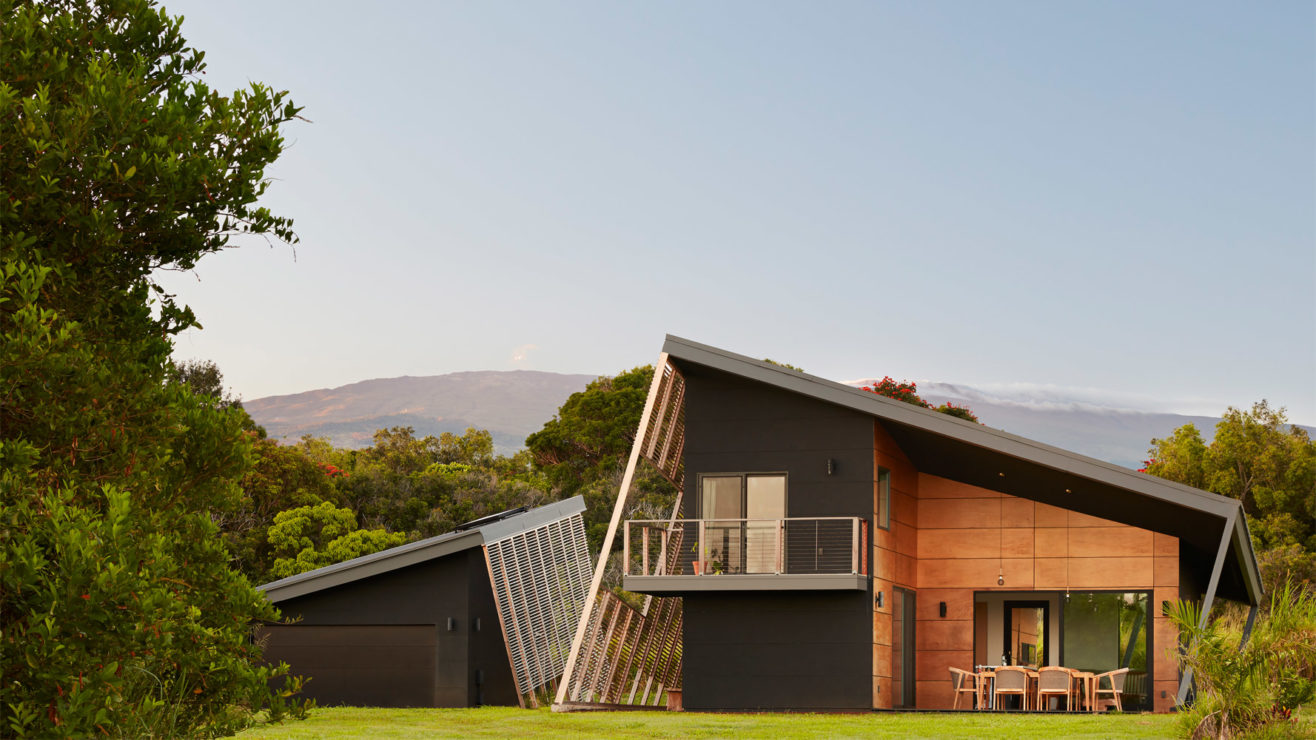
From their office in a former shoe factory in Milwaukee’s warehouse district, the firm of Johnsen Schmaling Architects is enlivening the facade of the city one project at a time. Brian Johnsen, a Chicago native, and Sebastian Schmaling, originally from Berlin, met at the University of Wisconsin-Milwaukee, worked in the same small office, and in 2003 branched off to begin their own practice. In a city that is mostly inhabited by large firms creating bland corporate and civic architecture, the architects explain that they are finding their niche in what could be considered a second- or third-tier city. “There’s a preconception that you can’t do anything architecturally profound outside of major metropolises,” says Schmaling, “We’ve been extremely fortunate in finding a clientele interested in art and abstract thought.”
 |
|
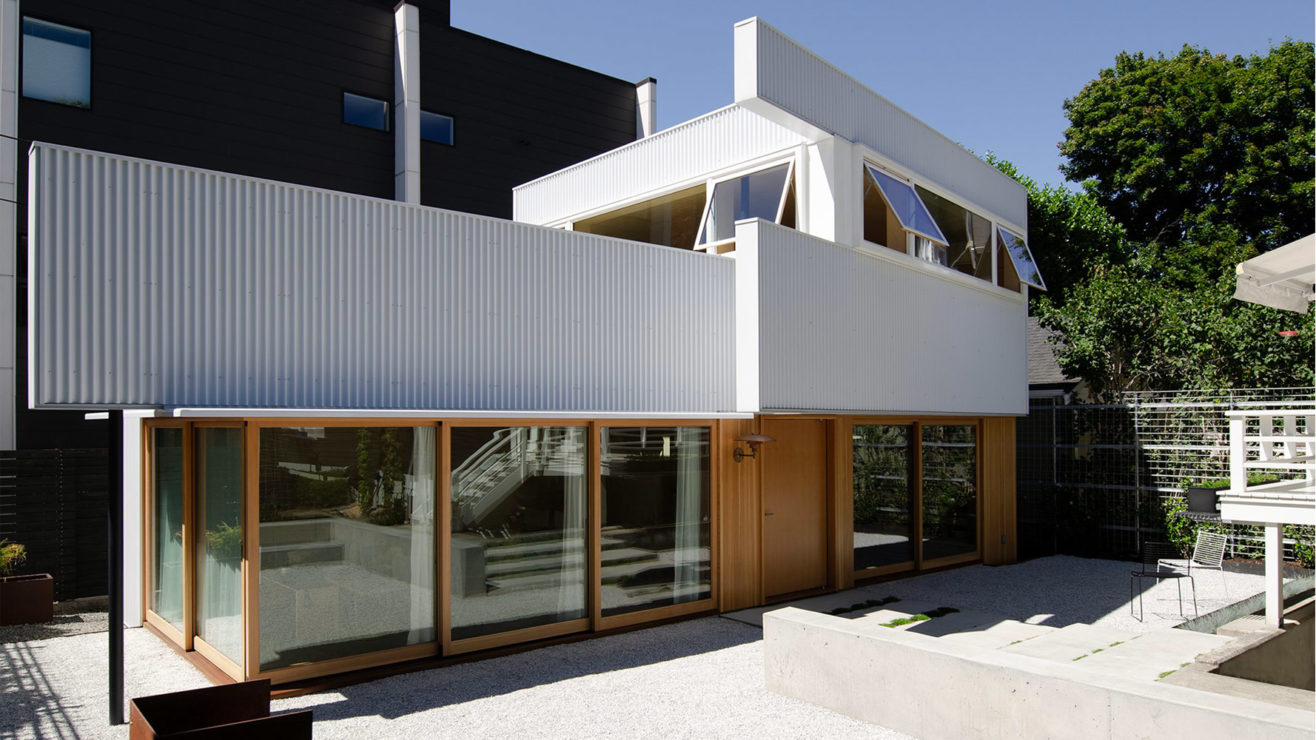
When approached by a local developer to design affordable and adaptable housing in Milwaukee’s blighted central city, Johnsen and Schmaling created a prototype called Duplex 01 that has a flexible layout and can be used as a single-family unit or as a two-family duplex. While the residence, with its double-volume box form and freestanding garden wall, stands out in the neighborhood, the architects were careful to keep the design contextual with the surrounding architecture. Currently developing their second duplex for another residential area in the city, the firm is excited to assist in the revitalization of these neighborhoods. “We want to mend the broken-fabric areas that have suffered due to disinvestment and create a positive urban environment,” says Johnsen.
Johnsen and Schmaling’s projects explore what they refer to as the “extended surface,” a process that questions the static qualities of a building’s exterior. Schmaling explains, “Instead of viewing the building’s envelope as a thin material layer, we propose that the surface of a building can assume spatial qualities, thus blurring the distinction between exterior and interior and public and private.” In the Parts House Pavilion, an outdoor living room, colorful patterns created by illuminated panels are cast onto an adjoining warehouse. The multihued reflections are easily viewed at night from the nearby main freeway. For a large-scale project, the architects have proposed redesigning a parking structure in downtown Milwaukee by wrapping a portion of the building with translucent panels. “These projects exemplify what can be done when there’s not a clear-cut private space,” says Schmaling. “It adds another layer of what a building can do and of what architecture can achieve.”
In an age where computer renderings are pervasive in the planning process, Schmaling finds that his team’s “archaic reliance on the physical rather than virtual” is a crucial part of their methodology. The architects rely almost solely on models to develop their work, including diagrammatic and conceptual ones. At I-Space Gallery in Chicago, Johnsen Schmaling’s work will be on display throughout the month of February. The exhibition will provide a closer look at drawings, photos, and models of this design duo.
By Randi Greenberg
|